

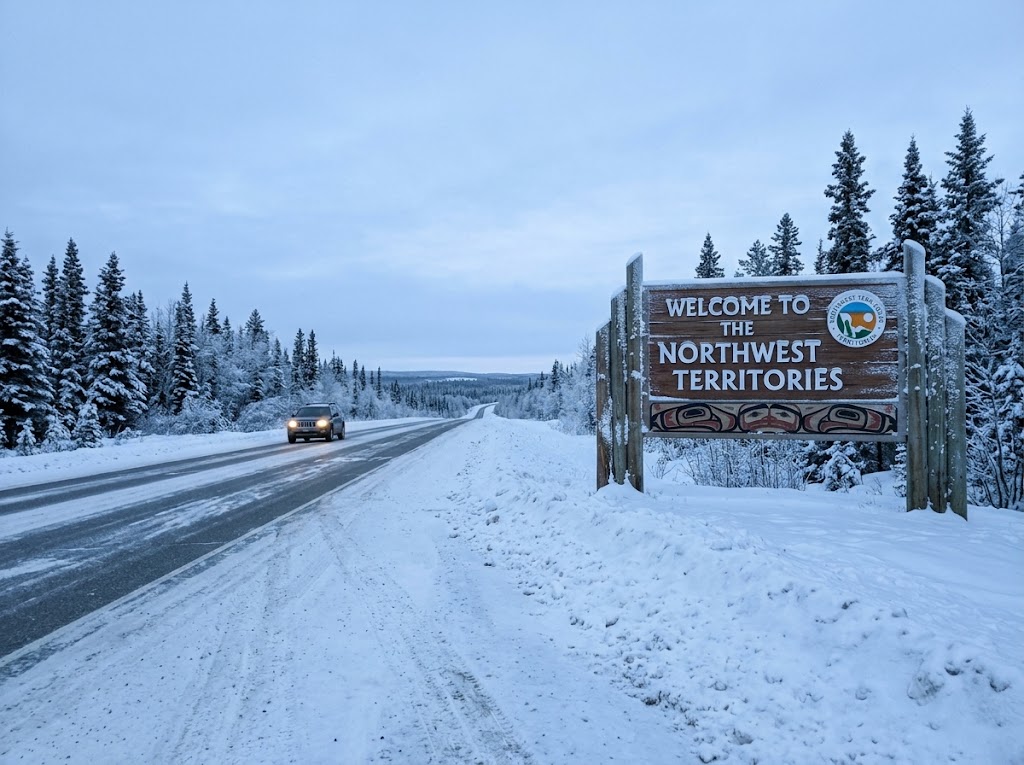
The Northwest Territories PNP is not inviting anyone right now. The territory held four Expression of Interest draws in 2026, the last on September 25, and says on its Expression of Interest page that the next one will be held in early 2027 with the date confirmed in late 2026. Across those four rounds the bottom of the selected score range fell from 417 to 317 out of a possible 845.
Why the timing matters more than the eligibility rules
Most pages about this program explain the three categories and stop. The territory runs one of the eleven provincial and territorial nominee programs, because Quebec and Nunavut do not have one, and together they account for roughly 91,500 of Canada's 2026 permanent residence admission targets. The thing that will actually decide your outcome here is a clock. Under the territory's own Employer-Driven Stream program guidelines, effective March 9, 2026, an Expression of Interest is valid for one year from submission. The September 25 round drew 105 invitations from a pool of 197 profiles, so fewer than a hundred profiles were left over from that round, and the next draw is in early 2027. A profile filed in March 2026 expires in March 2027, and the territory has not yet said where in early 2027 the draw will fall, so some spring 2026 profiles may expire days or weeks before it. If you are in that pool, the question is not only whether your score is competitive, it is whether your profile will still exist on the day of the draw.
How the Northwest Territories PNP actually works
The Northwest Territories Nominee Program, run by the territory's Department of Education, Culture and Employment, has three streams: Employer-Driven, Francophone and Business. Only the Employer-Driven Stream uses the Expression of Interest ranking system. The Francophone and Business streams remain first come, first served, because, as the territory put it when it announced the new selection process in February 2026, "these streams are not oversubscribed and would not benefit from an Expression of Interest process." The Francophone Stream page still carries a 2025 intake-closed notice, so confirm current intake status with the program before relying on it.
Inside the Employer-Driven Stream there are three categories, and this is where the official pages are easy to misread. The territory's departmental page lists three streams; the program site lists three categories inside one of them. They are:
Entry Level/Semi-Skilled Occupations, for NOC TEER 4 and 5 jobs
Skilled Worker, for NOC TEER 0 to 3 jobs
NWT Express Entry, also NOC TEER 0 to 3, for candidates already in the federal Express Entry pool
The sequence is: you get a job offer from an NWT employer, the employer registers in the territory's portal, you complete the Expression of Interest survey, the territory scores and ranks you, and employers of the highest-ranked candidates are invited to submit a full application. The program site is blunt about what that profile is not: it "is not an application but is an online profile created by completing a survey," and completing it "does not guarantee a nomination or the ability to submit a full application."
The invitation is not yours, and neither is the appeal
This is the structural fact that changes how you should handle the file, and it is in the guidelines rather than on any summary page.
The invitation goes to your employer, not to you. The February 2026 release announcing the system put it plainly: "Only employers who receive an invitation to apply may proceed to the application stage." Your employer then has 30 calendar days after the draw selection to submit the application, and if they miss it the Expression of Interest expires. If the territory asks for a missing document at the screening stage, the deadline is two business days. If it asks during assessment, it is 14 calendar days, and failure to answer means withdrawal and a fresh Expression of Interest, though the guidelines allow extensions where a third party is holding up a document.
Under the guidelines, only the employer is given an appeal right. An employer has 15 calendar days from the date of the denial letter to file a written appeal with the department. Late appeals are not considered. The appeal is decided on the original package only, so new or revised documents are not accepted. Appeals based on eligibility criteria are not considered at all. The decision is final.
Ansari Immigration treats a territorial Expression of Interest as an employer file rather than an applicant file, because the invitation, the 30-day clock and the only appeal right the guidelines provide for all sit on the employer's side of the table.
Before your employer files, it is worth knowing which half of this is actually your problem.
Doing this alone |
With Ansari Immigration |
You find out the Expression of Interest expired a year after you filed it |
The expiry date is calendared against the next announced draw before you rely on the profile |
Your employer discovers the 30-day filing window after it closes |
The employer's deadlines, not just yours, are tracked from the day of selection |
You learn which federal class you fall into when IRCC tests you against it |
You know before the nomination whether you are in the Canadian Experience Class lane or facing the 67-point Federal Skilled Worker grid |
Express Entry plus provincial nomination representation is a flat CAD $4,000 total, quoted upfront, with government fees shown separately. If your file is already in good shape, you will be told that too.
Check whether you are eligible ($80, 30 min)
Northwest Territories PNP requirements by category
The three categories are not variations of one rule set. They differ on language, on experience, and on whether you need cash in the bank.
Requirement |
Entry Level/Semi-Skilled (TEER 4 to 5) |
Skilled Worker (TEER 0 to 3) |
NWT Express Entry (TEER 0 to 3) |
Language |
CLB 4 in all four abilities, one test session |
CLB 6 for TEER 0 and 1; CLB 5 for TEER 2 and 3 |
CLB 7 for TEER 0 and 1; CLB 5 for TEER 2 and 3 |
Work experience |
12 months full time in the same position with the nominating employer, immediately before applying |
1 year full time in the past 10 years in the same or similar occupation, at an equal or higher TEER |
Same as Skilled Worker |
Work permit |
Valid work permit required |
Required |
Required |
Settlement funds |
$10,000 for the applicant, plus $2,000 per accompanying dependent |
No fixed amount; shown through the job offer and rate of pay |
No fixed amount |
Express Entry pool |
Not applicable |
Not applicable |
Pool acceptance, profile number and job seeker validation code, kept valid throughout |
Source: NTNP Employer-Driven Stream Program Guidelines, effective March 9, 2026. Verified October 2026.
The guidelines also set the only service standard the program publishes: the NTNP aims to assess a complete application package within twelve weeks of receipt, in the order received, and warns that processing times may increase with volume and complexity. Your Expression of Interest score itself is emailed to you and your employer within five business days.

Two things in that table are worth stopping on. First, the only category with a hard cash requirement is the lowest-paid one. A TEER 4 or 5 applicant must show $10,000 plus $2,000 per dependent, while a TEER 0 manager shows nothing beyond the job offer and the rate of pay. Second, the same job at the same TEER level needs CLB 6 under Skilled Worker and CLB 7 under NWT Express Entry. The category you pick, not the job, moves your language bar.
On the employer side, the business must be registered, have a year-round NWT office, and have operated in the territory full time for at least one year immediately before applying. It must be registered and in good standing with the Workers' Safety and Compensation Commission. If it is subject to the NWT Employment Standards Act it must file an Employment Standards Verification Form signed by an Employment Standards Officer, valid for six months. The wage must meet or exceed the Job Bank median for the occupation in the NWT, falling back to Yukon, then Alberta, then Canada if no NWT median exists, and must be at least the territorial minimum wage. Full time means at least 30 hours a week, and the position must be permanent, non-seasonal and in the NWT.
One caveat, because the document contradicts itself inside a single sentence. For the Entry Level/Semi-Skilled category the guidelines require advertising "for a minimum of 30 consecutive days (or 2 consecutive weeks) on each platform" at page 20, and 30 days is not two weeks. The equivalent Skilled Worker clause at page 12 reads "14 consecutive days (or 2 consecutive weeks)", which is internally consistent, so the Entry Level figure looks like a 30-day requirement carrying a parenthetical nobody updated. Nothing published resolves it, so an employer should confirm the current requirement with the program before stopping an advertisement.
What the 2026 draw results actually show
The territory publishes every round. Read together, the four rounds tell a story that no single round does.
Draw |
Profiles in pool |
Invitations |
Express Entry / Skilled / Entry Level |
Yellowknife / outside |
Score range |
March 25, 2026 |
295 |
65 |
32 / 20 / 13 |
37 / 28 |
597 to 417 |
June 25, 2026 |
300 |
79 |
40 / 20 / 19 |
52 / 27 |
590 to 386 |
August 26, 2026 |
260 |
104 |
47 / 21 / 36 |
83 / 21 |
555 to 346 |
September 25, 2026 |
197 |
105 |
26 / 21 / 58 |
96 / 8 |
492 to 317 |
Source: Northwest Territories Nominee Program Expression of Interest draw results. Verified October 2026.
Three movements matter.
The cut-off fell 100 points. The bottom of the selected range dropped from 417 in March to 317 in September. That is not the territory getting more generous, it is the territory working down a shrinking pool with a bigger allocation. IRCC increased the NWT's 2026 nomination allocation from 197 to 300 on August 7, 2026, which the territory said "restores the territory's allocation back to 2024 and 2025 levels," and it added the August 26 draw to spend the increase.
The mix inverted. Entry Level/Semi-Skilled selections went from 13 in March to 58 in September, while Express Entry selections fell from 47 in August to 26 in September. That is mechanically what you expect when a cut-off falls, because the points grid pays only 30 of the available 100 employment-in-the-NWT points for a NOC 4 or 5 job against 100 points for NOC 0 or 1. Lower the bar and the TEER 4 and 5 group comes into range.
The geography tightened, in the opposite direction to the incentive. The grid awards 50 points for full-time employment in an NWT community outside Yellowknife. Yet selections outside Yellowknife fell from 28 in March to 8 in September, and Yellowknife took 96 of the 104 September selections that carry a reported location. A fifty-point bonus for working outside the capital is not producing selections outside the capital. The published data does not say why, and no published NTNP page explains it, so treat the explanation as open; what is not open is the pattern.
One housekeeping note on that table. The September round lists 105 invitations but 96 plus 8 locations, which is 104. The discrepancy is on the territory's own page. We have reproduced the figures as published rather than reconciling them.
How the Northwest Territories PNP points grid is scored
The Employer-Driven Stream Expression of Interest is scored out of 845 points across three sections: Human Capital at 375, Connections to the NWT Labour Market at 340, and Adaptability at 130.
The individual bands reward some things far more than the public summaries suggest:
Education tops out at 100 points for post-secondary education related to the nominating occupation, which is more than the 80 points for a master's degree or doctorate. A diploma in the job you are being hired for outscores an unrelated PhD.
Work experience in the NWT is worth up to 100 points on its own, on top of the up-to-100 for general work experience. Three or more years in the territory is the single largest discretionary block most applicants can build.
A valid employer-specific work permit for an NWT employer is worth 50 points, and a job offer in one of the 11 listed skilled trades is worth another 40.
Age pays 50 points for ages 21 to 44, drops to 30 at 45 to 49, and collapses to 10 at 50 and over.
Here is how that arithmetic plays out. The two profiles below are illustrative, built only from the published grid, not from any particular file.
A 34-year-old welder in Hay River with CLB 7 across the board, a trade certificate, five years of experience in the trade, two of them in the NWT, and a closed NWT work permit, scores 22 points per band for language at 88, age 50, work experience 100, education 50, NOC 2 or 3 employment 60, trades job offer 40, outside-Yellowknife location 50, NWT work experience 75, and work permit 50. That is 563, above every 2026 cut-off.
A 47-year-old food counter attendant in Yellowknife with CLB 4, a post-secondary certificate unrelated to the job, two years of experience including 18 months with the nominating employer, and a closed work permit, scores language 48, age 30, work experience 40, education 20, NOC 4 or 5 employment 30, no trades bonus, no outside-Yellowknife bonus, NWT work experience 50, work permit 50. That is 268, below the 317 floor of the lowest 2026 round. Same program, same employer-driven stream, and the second profile does not clear even the most generous draw of the year.

What happens after the Northwest Territories nominates you
A nomination is a territorial decision. Permanent residence is a federal one, and they are assessed against different rules.
The nomination is valid for six months from the date it is issued, can be used only once, and is automatically revoked if the permanent residence application is denied. You and your employer must sign a Memorandum of Understanding with the territorial government and keep meeting its terms until the PR decision. An employer who violates the MOU can be barred from the stream for up to three years, and confirmed intentional misrepresentation carries a one-year bar from the program.
An approved nominee can use the Work Permit Support Letter to apply for an LMIA-exempt, employer-specific work permit closed to the nominating occupation, after the employer submits the job offer and pays the $230 employer compliance fee, which is the same portal step behind any employer-specific work permit. Registration with the territorial program itself is free.
Then the federal half begins, and this is the part that surprises people. An enhanced nomination through NWT Express Entry is worth 600 extra points in the Express Entry pool, which in practice places a nominee at the top of the pool. It does not settle the application. IRCC's own program delivery instructions on enhanced provincial nominations state that IRCC is responsible for "assessing that the applicant meets the program requirements of at least one of the federal economic immigration programs." The nomination gets you invited; a federal officer still has to place you inside the Canadian Experience Class, the Federal Skilled Worker Program or the Federal Skilled Trades Program and test you against that class. Which class you land in depends largely on whether you have a year of skilled Canadian work experience, and the Federal Skilled Worker route carries a 67-point selection grid that has nothing to do with your CRS score or your territorial score. If you want the obligations that come with the nomination itself, we have written separately on whether you have to live in the province that nominated you.
Is the Northwest Territories PNP an easy back door to PR?
The honest answer has two sides, and the market usually gives you only one.
The case that it is easier: the lowest 2026 cut-off was 317 out of 845, which is under 38 percent of the available points. The pool is tiny, 197 profiles at the September round against a 300-nomination allocation. Registration with the territory is free of charge and the guidelines set out no NTNP application fee. And a nomination is 600 CRS points, which in practice settles the invitation question.
The case that it is not: you cannot enter at all without an NWT employer who is willing to register, file, and carry the paperwork, and for the Entry Level/Semi-Skilled category you must already have been working for that employer full time for 12 months. The invitation, the 30-day filing window and the sole appeal right belong to the employer. There is no draw until early 2027, and your Expression of Interest dies one year after you file it. Ninety-six of the 104 September selections with a location reported were in one city of roughly 20,000 people. And the allocation that produced the generous late-2026 rounds was a restoration of a cut, not a permanent expansion, so 2027 numbers are not predictable from 2026.
Resolved: this is a strong route if you are already living and working in the Northwest Territories, and close to a non-route if you are not. The up-to-100 for NWT work experience, the 50 for a closed NWT work permit and the up-to-100 for NWT education are 250 of the 845 points, and none of them can be bought from outside the territory. If you are choosing a jurisdiction from abroad on the basis of a low cut-off, read our comparison of what actually makes one province easier than another first, because a low score floor in a pool you cannot enter is not an advantage.
If you have been sitting in the NWT pool since the spring, when does your Expression of Interest expire relative to the early-2027 draw? Tell us in the comments, because the one-year clock is the part nobody is being warned about. Keep it general; for advice on your own file, use a consultation.
Where this most often goes wrong
Five failure modes, each traceable to a published rule rather than a guess.
The profile expires before the draw. One year from submission, with no round between September 25, 2026 and early 2027.
The employer lets the 30 days lapse. The selection is theirs to act on, and the Expression of Interest expires if they do not.
The two-business-day screening deadline is missed. That is the window to supply a missing document before the application is withdrawn.
The nomination expires unused. Six months, single use, revoked automatically if the PR application is refused.
The occupation is coded optimistically. IRCC, not the territory, decides whether you meet the requirements of a federal economic class, and the nominating occupation's TEER level is what decided which category you were eligible for in the first place. A misclassification matters most when the corrected code falls outside the eligible band.

Frequently asked questions about the Northwest Territories PNP
Is the Northwest Territories PNP open?
The Northwest Territories PNP remains open to Expression of Interest submissions year round, but it is not issuing invitations at present, because the last 2026 draw was held on September 25 and the territory says the next round will be in early 2027.
When is the next NWT PNP draw?
The territory states that the next Expression of Interest draw will be held in early 2027, with the exact date to be confirmed in late 2026, after four rounds in 2026 on March 25, June 25, August 26 and September 25.
What are the Northwest Territories PNP requirements?
You need a permanent, full-time job offer of at least 30 hours a week from an established NWT employer who registers and applies on your behalf, a valid work permit, and the language and experience level set by your category, which ranges from CLB 4 for TEER 4 and 5 jobs to CLB 7 for TEER 0 and 1 jobs under NWT Express Entry.
How are Northwest Territories PNP points calculated?
The Employer-Driven Stream Expression of Interest is scored out of 845 points, split into Human Capital worth up to 375, Connections to the NWT Labour Market worth up to 340, and Adaptability to the NWT worth up to 130, and the territory publishes the full grid as a PDF rather than offering a calculator.
What score do I need for the Northwest Territories PNP?
There is no published minimum, only the score range of each completed round, and in 2026 the bottom of the selected range fell from 417 in March to 317 in September, so a score that was uncompetitive in the spring would have been selected by the autumn.
What is the Northwest Territories PNP processing time?
The program guidelines state that the NTNP aims to assess complete application packages within twelve weeks of receipt, processed in the order received, and note that processing times may increase with the volume of applications received and the complexity of the application. That is a target rather than a guarantee, and the clock runs only from receipt of a complete package. The other published clocks are five business days for your Expression of Interest score, 30 calendar days for the employer to apply after selection, 14 calendar days to answer a document request, and six months of nomination validity.
Can I apply to the Northwest Territories PNP without a job offer?
You cannot use the Employer-Driven Stream without a job offer from an NWT employer, because the employer registers and submits the application, although the Business Stream is for candidates investing in or buying an NWT business, and the Francophone Stream also requires a job offer but can nominate an applicant who is outside Canada without a work permit, while anyone already in Canada must hold a valid work permit for the duration of the application process.
Is the Northwest Territories PNP open to international students?
There is no dedicated international-graduate category in the Northwest Territories PNP, so a graduate enters through the same Employer-Driven Stream as anyone else, although post-secondary education completed in the NWT is worth up to 100 Expression of Interest points, which is a significant advantage for someone who studied in the territory.
Why work with Ansari Immigration
Express Entry plus a provincial or territorial nomination is a flat CAD $4,000 total, quoted upfront, with government fees shown separately. Every file is handled personally by the firm's licensed RCIC, regulated by CICC, start to finish: all forms, IRCC correspondence, webforms and follow-ups included, with direct access throughout. No juniors, no call centres. Practising since 2019, and document-expiry reminders continue after the file closes.
Confused about any step of the territorial process? Ask in the comments, we read every one, and keep it general; for advice on your specific case a consultation is the right route.
Book a consultation ($80, 30 min)
Related Posts
Easiest Province to Get PR in Canada: What Actually Makes One Easier (2026): A comparison of what genuinely moves your odds between provincial programs, rather than which cut-off score looks lowest.
Do You Have to Live in the Province That Nominated You? Intent to Reside vs. Your Mobility Rights (2026): What the intent-to-reside commitment in a nomination actually obliges you to do after you land.
Bridging Open Work Permit (BOWP): Who Qualifies and How to Apply in Canada (2026): How to keep working while a permanent residence application is in process, and why a nomination letter's wording decides eligibility.
This article is for general information only. It is not legal advice. Program criteria, requirements, processing times, and selection approaches can change without notice. Always confirm details on official government websites or consult a licensed Regulated Canadian Immigration Consultant (RCIC) for advice specific to your situation.