


There is no single easiest province to get PR in Canada. The honest answer is that the easiest province to get PR in Canada depends on your profile: smaller provinces often have less competition in their Provincial Nominee Program (PNP) streams, while larger provinces have more jobs that unlock the job-offer-based routes to permanent residence.
What “easiest province to get PR in Canada” really means
Most people searching for the easiest province to get PR in Canada are really asking one of two questions: where can I win a provincial nomination with the score I have, or where can I find the job offer that some PR routes require. Those are different problems with different answers, so the “easiest province” is rarely the same for two different people.
Every province and territory sets its own streams, its own requirements, and the number of people it can nominate each year. That is why a province that is realistic for a healthcare worker may be out of reach for someone in a different occupation, and why chasing a province that is “easy” for someone else can waste months.

How the Provincial Nominee Program decides who gets PR
The Provincial Nominee Program lets provinces and territories nominate people who have the skills, education and work experience to help their economy, want to live there, and want to become permanent residents of Canada. There are two ways to apply: through the Express Entry process or through the non-Express Entry (paper-based) process, depending on the province and stream. IRCC explains both routes on its provincial nominee page.
The Express Entry route is the one most people are chasing. If a province nominates you and you qualify for a federal Express Entry program, you create your Express Entry profile and receive 600 extra points, which IRCC says help you get invited to apply for permanent residence. Because 600 points is half of the maximum Comprehensive Ranking System score, that nomination is the single biggest lever most candidates have.
Two places do not run a PNP at all: Quebec, which selects its own economic immigrants through a separate provincial system, and Nunavut. Every other province and territory, including British Columbia through the BC PNP, runs its own program.
Smaller provinces vs larger provinces: the real trade-off
This is where the “easiest province” question actually gets answered. Smaller, less-populated provinces tend to draw fewer candidates into their PNP streams, so a nomination can be easier to win if your occupation matches what they need. Larger, more-populated provinces have more job openings and a higher standard of living, which makes a successful job search, and the job-offer-based PNP route, more realistic.
Neither end of that spectrum is automatically easier. A smaller province with a winnable stream is no help if it never targets your occupation. A big province full of jobs is no help if you cannot land the offer. The easiest province in Canada to get PR is the one where your specific profile lines up with an open route.
If you are weighing two or three provinces and cannot tell which one is realistic for your occupation and score, that is exactly the conversation to have before you file. Amir Ansari, RCIC, reviews your profile against current provincial streams and tells you where you actually have a shot, not where a forum post says it is easy. Book a consultation with Amir Ansari, RCIC.
Routes that depend on a job offer
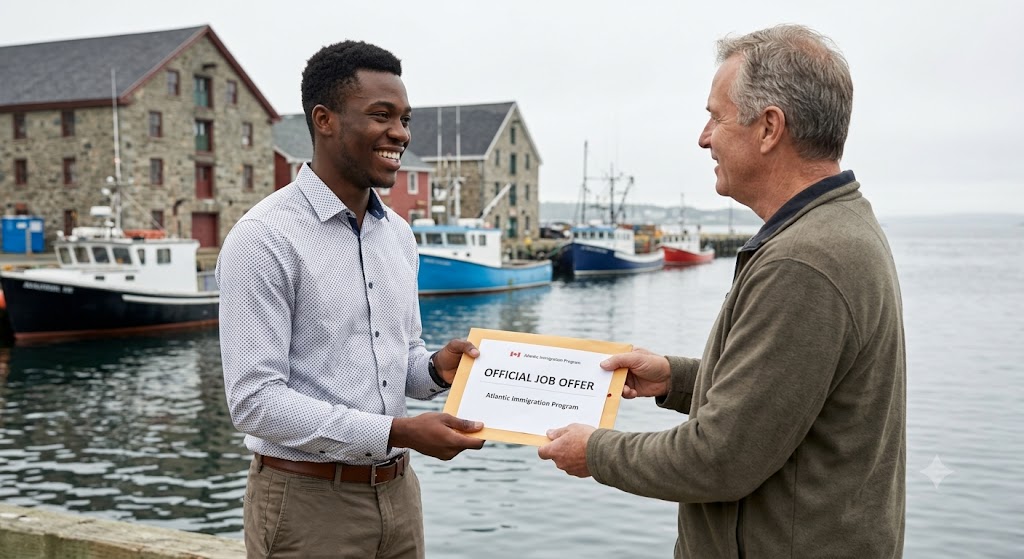
Some of the most accessible PR pathways are built entirely around a job offer. The Atlantic Immigration Program is a permanent residence route into New Brunswick, Nova Scotia, Prince Edward Island, and Newfoundland and Labrador, and to apply you must have a valid job offer from a designated employer in Atlantic Canada, along with qualifying work experience, the right education, proven language ability, and proof of funds. Recent graduates from a recognized post-secondary school in Atlantic Canada may be exempt from the work-experience requirement.
The lesson for anyone comparing provinces: if you can secure a genuine job offer, provinces you might have written off can suddenly become the easiest path. If you cannot, focus your energy on the no-job-offer Express Entry-aligned streams instead. Which provinces currently run streams without a job offer changes from draw to draw, so confirm the live criteria on each province’s official page before you commit.
From Amir’s desk: choose the province around your profile
In practice, the candidates we work with at our Metro Vancouver office get the best results when they stop asking “which province is easiest” and start asking “which province fits me.” I have had great outcomes steering clients toward medium-population provinces, places that still offer a decent quality of life and real job openings, but where the PNP is comparatively winnable and a bit of focused guidance to lift the score gets them to a nomination.
The mistake I see most often is picking a province first and trying to force the profile to fit it. It should run the other way. Your qualifications, skills and work experience come first; the right province is chosen around them. That single reordering is usually what turns a stalled file into a nomination.
Why this matters for your immigration application
Targeting the wrong province burns the one thing applicants cannot get back: time. Provincial streams open and close, occupation lists shift, and a profile that was competitive in one province sits unused in another. Picking the province that fits your profile, rather than the one that sounds easy, is the difference between a nomination this year and another year waiting for permanent residence. If timelines are your main worry, see how long it takes to get Canada permanent residency once you are nominated.
For candidates in Metro Vancouver and across BC, the BC PNP is often the natural starting point because you may already have the local work experience and ties the province is scoring. But it is still worth comparing it against other provinces where your occupation might face less competition.
Before you build your Express Entry profile or register for a provincial stream, have an RCIC map your profile against the provinces where you can realistically win. Amir Ansari, RCIC, regulated by the College of Immigration and Citizenship Consultants, helps applicants choose the right province and build the file that gets to a nomination. Reserve your spot at Ansari Immigration.

Frequently asked questions about the easiest province to get PR in Canada
Which province is the easiest to get PR in Canada?
There is no single easiest province. The easiest province to get PR in Canada is the one whose PNP streams or job-offer routes match your occupation, score and work experience. Smaller provinces often have less competition; larger ones offer more job offers.
What is the easiest province to get PR in Canada for international students?
It depends on where you studied and worked. Several provinces run graduate-focused or Express Entry-aligned streams, and your provincial work experience and ties matter, so the easiest province for an international student is usually the one where you already studied and built local experience. Confirm each province’s current student and graduate streams on its official page.
Which provinces don’t require a job offer for PR?
Some PNP streams, especially Express Entry-aligned ones, do not require a job offer, while others do. Which streams are open without a job offer changes regularly, so check the specific province’s official PNP page for its current criteria before applying.
Does a provincial nomination guarantee PR?
A nomination through the Express Entry process adds 600 points, which IRCC says help you get invited to apply for permanent residence. It is not an automatic guarantee: you still create your profile, receive an invitation, file the federal PR application, and must remain admissible.
Is it easier to get PR through a province or through Express Entry directly?
For many candidates a provincial nomination is the more reliable route, because the 600 extra points can lift a CRS score that might not be selected on its own. The trade-off is that you must qualify for, and intend to live in, the nominating province.
Related Posts
PR Pathways in Canada 2026: The 5 Most Accessible Routes to Permanent Residence: The five federal routes to permanent residence and who each one fits.
No Job Offer? No Problem with These PNP Programs: Provincial streams that can lead to PR without a Canadian job offer.
Provincial Nominee Programs: A Route to Permanent Residency for International Students: How students can use a PNP nomination to move from study permit to PR.
This article is for general information only. It is not legal advice. Program criteria, requirements, processing times, and selection approaches can change without notice. Always confirm details on official government websites or consult a licensed Regulated Canadian Immigration Consultant (RCIC) for advice specific to your situation.