

Most fees are waived, applications are by mail only, and approvals can lead to up to a three-year open
Work Permit or a Study Permit without a PAL or proof of funds.
On April 27, 2026, Immigration, Refugees and Citizenship Canada published complete instructions for the
temporary measures that support cross-border mobility for Indigenous Peoples. If you are a U.S.-born or
U.S. citizen Indigenous person who is a member of a U.S. Federally Recognized Tribe, or a citizen of the
Manitoba Métis Federation, and you have a close family member in Canada who is a Canadian citizen,
permanent resident, or registered under the Indian Act, you may qualify for an open Work Permit or a Study
Permit under these measures. Applications are prioritized and most government fees are waived. You must
apply by mail, not at the border.
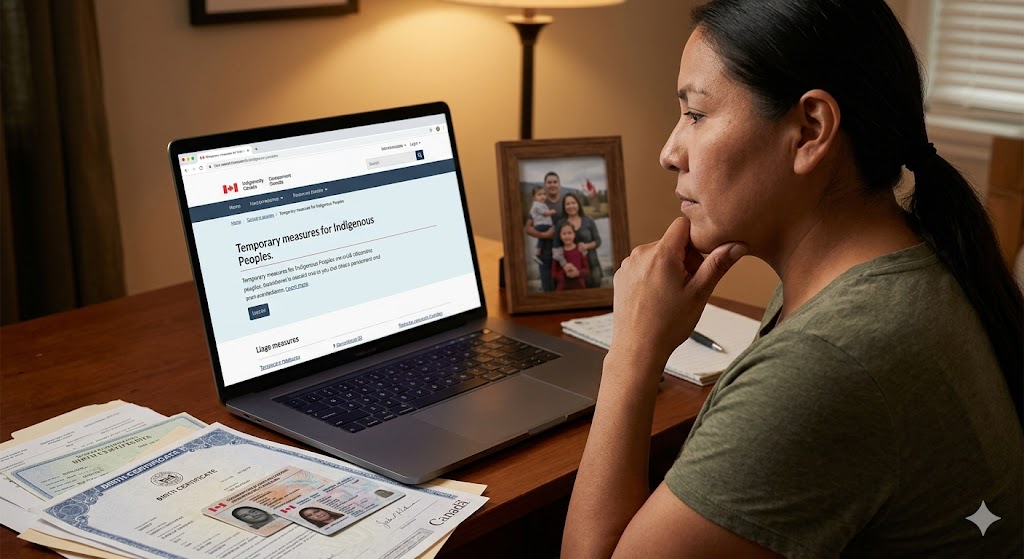
If you are unsure whether you fit, you are not alone. These rules are new in practice, and timelines matter
for temporary status. We help clients in Vancouver, North Vancouver, West Vancouver, Coquitlam,
Burnaby, Surrey, and Richmond confirm eligibility, choose the right permit, and mail a clean package the
first time.
IRCC's implementation follows the public policy announced on October 10, 2024, and shifts the
conversation from consultation to action. You can read the official client pages and forms on the IRCC
website, which we link throughout this guide.
Who is eligible under the Indigenous border mobility measures
IRCC's new pages confirm who can apply and which proofs you need. Start with the official "Who can
apply" page from IRCC for the exact wording.
You may be eligible if all of the following are true:
You are U.S.-born or a U.S. citizen.
You are a member of a U.S. Federally Recognized Tribe, or you are a citizen of the Manitoba Métis
Federation.
You have an "anchor" family member in Canada who is a Canadian citizen, permanent resident, or a
person registered under the Indian Act, and that relative lives in Canada.
You are applying for temporary status, such as an open Work Permit or a Study Permit, under the
temporary measures.
Family members can accompany you or follow you later under the same measures. IRCC still applies
standard admissibility rules. If you have a concern about medical, criminal, or past immigration history, get
tailored advice before you file.
For study planning, see how this route interacts with your program and future PGWP choices. Our team can
review your program and timing with you. If you need broader travel or document help, our service page on
temporary resident visas and permits explains how we plan multi-step files.
What you can apply for and what IRCC is waiving
Under these measures you can apply for an open Work Permit or a Study Permit. IRCC has confirmed
several exemptions and fee waivers to reduce friction and reunite families faster. Applications are
prioritized.
Here is a quick comparison based on the official IRCC pages:
Path |
Typical validity |
Prioritized processing |
Key waivers and not required |
Open Work Permit |
Up to three years |
Yes |
Most fees waived, no immigration medical exam requirement under the measures |
For program length |
Yes |
No PAL, no proof of funds, most fees waived, no immigration medical exam requirement under the measures |
These waivers are significant. Removing the PAL and proof of funds for the study route makes planning
faster for students. The open Work Permit lets you start work for almost any employer, which can help
families stabilize in communities like Surrey or Richmond while longer term options are assessed. Always
confirm details on IRCC's current pages before filing, because the public policy can be amended or
revoked.
Official sources:
• IRCC hub for the measures, including fee waivers and prioritization: Temporary measures to reunite
families of Indigenous people separated by Canada's border
• Waivers and exemptions, including no PAL, no proof of funds, and medical exam exemption: Before you
The paper process you must follow, step by step
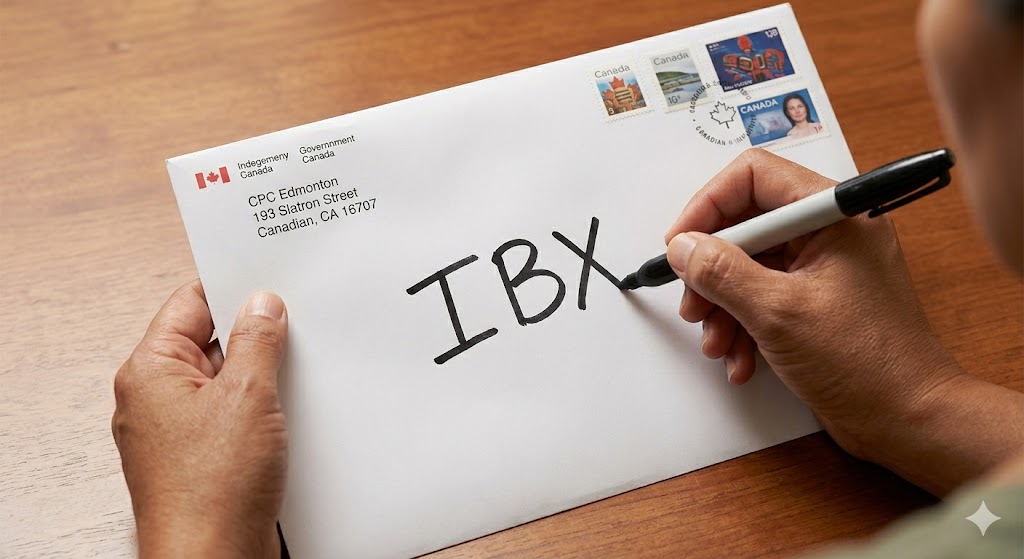
IRCC requires a paper application by mail. You cannot apply at a port of entry and you cannot submit
online.
Complete the dedicated forms. IMM 0800 is required and IMM 0802 is recommended based on IRCC's
instructions.
Mail the package to CPC Edmonton. IRCC asks you to write "IBX" on the envelope so the application is
routed correctly.
Track delivery. Keep copies of every page, especially your tribal or MMF proof and your family
relationship proof to the Canadian anchor.
If approved, carry your Port of Entry letter and proof of eligibility when you travel.
Use IRCC's step-by-step pages for the correct address, current forms, and mailing instructions:
If you want a second set of eyes before you spend time and money on courier fees, you can reserve a
consultation time for a focused file check. We confirm eligibility, fix gaps in relationship proofs, and build a
clear cover letter that matches IRCC's list.
Three real world examples from Metro Vancouver
Take Aiden, for example. Aiden was born in the U.S. and is a member of a Federally Recognized Tribe. His
spouse in Surrey is a Canadian permanent resident. Aiden applies for a three-year open Work Permit by
mail with IMM 0800 and includes his spouse's PR proof and their marriage certificate. No medical exam is
required under these measures. This profile is well aligned with the policy.
Layla is a U.S. citizen and a citizen of the Manitoba Métis Federation. Her parent in Richmond is a
Canadian citizen. Layla receives a letter of acceptance from a designated learning institution and applies for
a Study Permit. Under the measures, she does not need a PAL or proof of funds. Her minor child is included
as an accompanying family member.
Miguel identifies as Indigenous but is not a member of a U.S. Federally Recognized Tribe and is not an
MMF citizen. His sibling lives in Burnaby and is a Canadian citizen. Miguel does not fit the current Annex A
list, so these measures do not apply to him for now. He looks at regular study permit, work permits, or a
visitor visa while watching for any future expansion of the measures.
Why this matters for families, students, and employers in B.C.
For families in Vancouver, North Vancouver, West Vancouver, Coquitlam, Burnaby, Surrey, and Richmond,
the measures can bring loved ones together faster with fewer financial barriers. For students, the study
route is simpler because IRCC is not asking for a PAL or proof of funds under this policy. For employers, an
open Work Permit can mean quicker onboarding for eligible candidates without a separate employer
process.
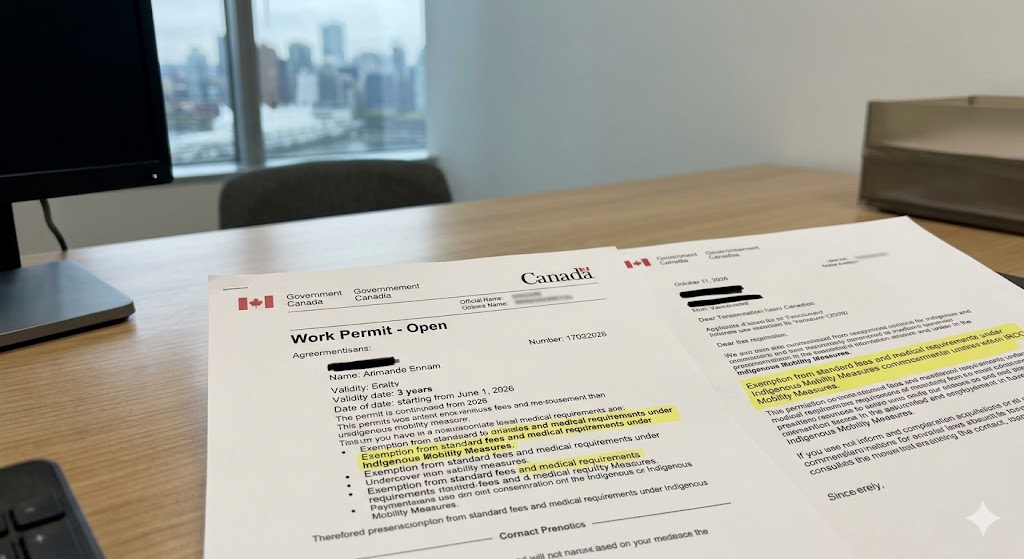
If you plan to work or study after arrival, know your permit conditions. Open Work Permits usually allow work
for most employers, but there are still conditions printed on the document. If you want to see where the
number and conditions appear on your permit after approval, our explainer on where to find your work
permit document number can help you prepare for banking or SIN appointments.
What happens next
The public policy that enables these measures took effect on October 10, 2024 and can be amended or
revoked at any time. IRCC's 2026 to 2027 Departmental Plan confirms that the department is still working
on longer term legislative or regulatory options under the UNDA Action Plan item SP52, but no bill has been
tabled yet. Expect iterative updates. Always check the "last updated" date on IRCC's pages before you rely
on a rule.
Public policy details, conditions, and revocability: IRCC temporary public policy
Longer term planning signal: IRCC 2026 to 2027 Departmental Plan
If you qualify now, it is sensible to file while the waivers apply. If you do not qualify, keep your options open
with standard routes and watch for future updates. For longer term plans after you arrive, our permanent
residence planning page explains how temporary status can lead to PR.
Before you mail the package, you can reserve a consultation time for a focused review. We offer fixed-fee
screening, a tailored document checklist for IMM 0800 and IMM 0802, and careful packaging so your file is
easy for an officer to assess.
FAQs
Can I apply at the border or by flagpoling?
No. IRCC is clear that you must apply by mail. Do not attempt to apply at a port of entry. See IRCC's How to apply.
Do accompanying family members still need a visa or eTA?
Yes, regular travel document rules still apply. Non U.S. nationals who are accompanying may need a TRV or an eTA to travel, even if their permit is approved. IRCC explains this on After you apply.
Do I need a medical exam?
Under these measures, IRCC has exempted the immigration medical exam requirement. Admissibility rules still apply, and IRCC can ask for more information if needed. See Before you apply.
Are all Indigenous peoples covered by these measures?
No. Right now the scope is limited to members of U.S. Federally Recognized Tribes and citizens of the Manitoba Métis Federation who meet the family anchor requirement in Canada. Review IRCC's Who can apply page for the exact list.
Does this change PGWP rules for students?
No. Post-graduation Work Permit rules are unchanged. Your choice of DLI and program still matters. We can help you align your program with PGWP rules through a short study permit planning review.
What if my application is refused under these measures?
You may be able to challenge an unfair refusal through judicial review, but success is never guaranteed. In our experience, the best defense is a clear, complete package that matches IRCC's list, especially on proving tribal or MMF citizenship and the family relationship. If you received a refusal or a procedural fairness letter, book a focused file check before you respond.
How Ansari Immigration helps
We are a boutique, practical, trust-focused firm. Our team is up to date on the new IRCC instructions and
the paper-first process. We offer:
Eligibility screening tied to the measures, including confirming your tribal or MMF documentation and
your Canadian anchor's status.
A tailored checklist for IMM 0800 and supporting proofs, plus mailing guidance for CPC Edmonton, IBX.
Study planning without a PAL or proof of funds requirements under the policy, ensuring DLI choices
protect your future PGWP goals.
Work Permit strategy for families who want a faster start in Metro Vancouver, including Surrey and
Richmond, where employers value open work permit flexibility.
Reliable and fast support, transparent pricing, and technology-friendly file reviews with secure document
sharing.
Longer term planning, including Express Entry and a deeper look at policy risks and timelines. If you are
curious about how IRCC is thinking about upcoming reforms, our explainer on Express Entry reforms
and the 2026 consultation can help you plan ahead.
If you want us to check your eligibility and package before you mail it, book a focused file check today. We
will review your status, timing, and extension strategy before you submit.
Closing thoughts
IRCC's new instructions make the Indigenous border mobility measures real for families who have waited a
long time. The window is open now, applications are prioritized, and many fees are waived. If you qualify,
prepare a careful, paper-based package and get it moving. If you need help, our team is ready to support
you from first screening to approval.
Disclaimer
This news post is for general information only and is not legal advice. Immigration rules change, and IRCC
can amend or revoke the public policy at any time. Always check IRCC's official pages for the latest steps
and requirements.