


The cost of living in Vancouver in 2026 runs roughly $2,900 to $3,600 a month for one person and $6,000 to $7,500 for a family of four, with rent the single biggest line. Across Metro Vancouver, the average rent for a purpose-built apartment was $1,970 a month in October 2025 (Canada Mortgage and Housing Corporation), and a new lease usually costs more than that average. This guide breaks down what newcomers actually spend here, using official BC and federal figures rather than guesswork, so you can plan a budget before you land and pick a neighbourhood you can afford.
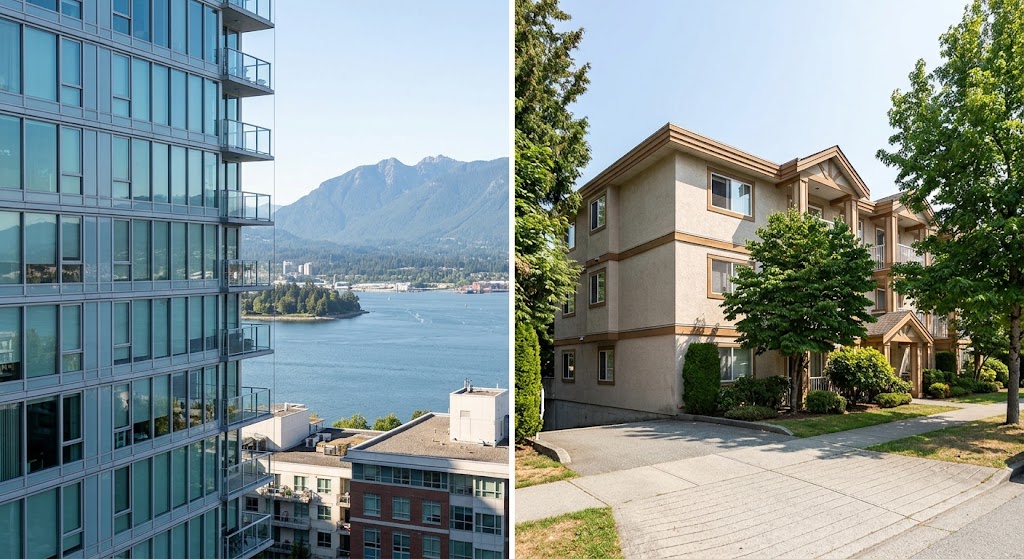
Vancouver is consistently one of Canada's most expensive cities, and getting the numbers wrong is expensive in a way that follows you. Newcomers who sign a lease based on a headline average rent often find the apartment in front of them costs several hundred dollars more, blow through their savings in the first few months, and end up moving to a suburb they could have chosen from the start. The figures below are the ones we point clients to when they ask, can we actually afford Vancouver?
In this guide:
How much it costs to live in Vancouver each month
What you will really pay in rent (and where it is cheaper)
Groceries, transit, phones, utilities and health care
How much income you need
Vancouver versus Toronto
Budgeting mistakes newcomers make
How Vancouver's cost of living affects your immigration plans
FAQs
How much is the cost of living in Vancouver each month?
The cost of living in Vancouver is driven almost entirely by housing. Once rent is covered, the day-to-day costs (food, transit, a phone) are broadly similar to other large Canadian cities, and a few big expenses are unusually low here because British Columbia has removed them: there are no monthly health premiums, and children 12 and under ride transit free.
Here is a realistic monthly picture for two common newcomer households. Treat the rent figures as the starting point of a new lease in the city of Vancouver proper, not the cheapest suburb.
Estimated monthly budget, Vancouver 2026
Monthly cost |
Single person |
Family of four |
Basis |
Rent |
$1,900 to $2,300 |
$2,800 to $3,600 |
CMHC average $1,970 (all units, Oct 2025); newer or larger units and new leases cost more |
Groceries and food |
$400 to $600 |
$1,200 to $1,600 |
Estimate from Statistics Canada household spending patterns |
Transit |
$117 (1-zone monthly pass) |
$234 (two adults; kids under 13 free) |
TransLink, effective July 1, 2026 |
Mobile phone |
$40 to $60 |
$120 to $180 |
Estimate (market plans, not an official figure) |
Home internet and utilities |
$90 to $140 |
$150 to $220 |
Estimate (varies by unit and provider) |
Health coverage (MSP) |
$0 |
$0 |
Province of B.C., premiums eliminated Jan. 1, 2020 |
Child care |
$0 |
$200 to $2,240 |
B.C. $10-a-Day rate is $200 per child; unsubsidized centre care averages about $1,120 per child |
Everyday total |
about $2,900 to $3,600 |
about $6,000 to $7,500 |
Excludes debt, savings, one-time move-in costs |
Source: Rent from CMHC Rental Market Survey (Vancouver, October 2025). Minimum wage and MSP from the Province of British Columbia. Transit from TransLink (effective July 1, 2026). Child care from the Province of British Columbia. Grocery, phone and utility lines are estimates, not official figures. Verified August 2026.
The single largest variable is child care, and it swings a family budget by thousands. If you can secure a space in a $10-a-Day ChildCareBC centre, you pay no more than $200 a month per child; if you cannot, unsubsidized full-time centre-based care averages about $1,120 a month per child in B.C. That one line explains why two families with identical incomes can have completely different experiences of affordable Vancouver.
Have you already priced out a Vancouver move? If you have real rent or child-care numbers from your own search, share them in the comments; concrete figures from recent arrivals help everyone planning the same move.
Average rent in Vancouver: what you will actually pay
Rent is where most of your budget goes, and it is also where the published average is most misleading. According to CMHC's Rental Market Survey, the average rent across all purpose-built apartments in Metro Vancouver was $1,970 a month as of October 2025, with a median of $1,875 and a vacancy rate of 3.7 percent. That number is real, but it blends brand-new and decades-old buildings, and it reflects sitting tenants as well as new ones. When you sign a new lease today, you are competing at the top of that range, not the middle of it.
Where you look matters as much as when. CMHC's own survey zones show a wide spread across the region:
Average purpose-built apartment rent by area (Metro Vancouver, October 2025)
Area |
Average rent per month |
Downtown Vancouver |
$2,198 |
Kitsilano / Point Grey |
$2,051 |
North Vancouver (City) |
$2,127 |
Central Park / Metrotown (Burnaby) |
$1,958 |
Richmond |
$1,887 |
New Westminster |
$1,794 |
Surrey |
$1,728 |
White Rock |
$1,547 |
Source: CMHC Rental Market Survey, Vancouver survey zones, October 2025. Verified August 2026. These are averages across all unit sizes; a two-bedroom or a newly built unit sits above the area average.
Two things follow from this table. First, moving one municipality out, from Vancouver proper to Surrey or New Westminster, can save roughly $400 a month for a comparable unit, which is $4,800 a year. Second, the good news for 2026 renters: CMHC reports that Metro Vancouver's rental vacancy rate has climbed to a level not seen in more than 30 years, driven by a record wave of new rental completions. In practice that means more choice and more landlords offering incentives such as a free month of rent, especially on newer buildings. Before you sign, know your rights as a tenant in B.C., because the rules on deposits, rent increases and eviction are set provincially.
The other monthly costs: groceries, transit, phones, utilities and health care
Health coverage is the standout. British Columbia eliminated Medical Services Plan (MSP) premiums on January 1, 2020, so residents no longer pay a monthly health premium at all. Newcomers should know there is a wait period before MSP coverage begins, generally the remainder of the month you arrive plus two more months, during which you should hold private medical insurance. We cover the enrolment steps and the wait in a separate guide to MSP for newcomers.
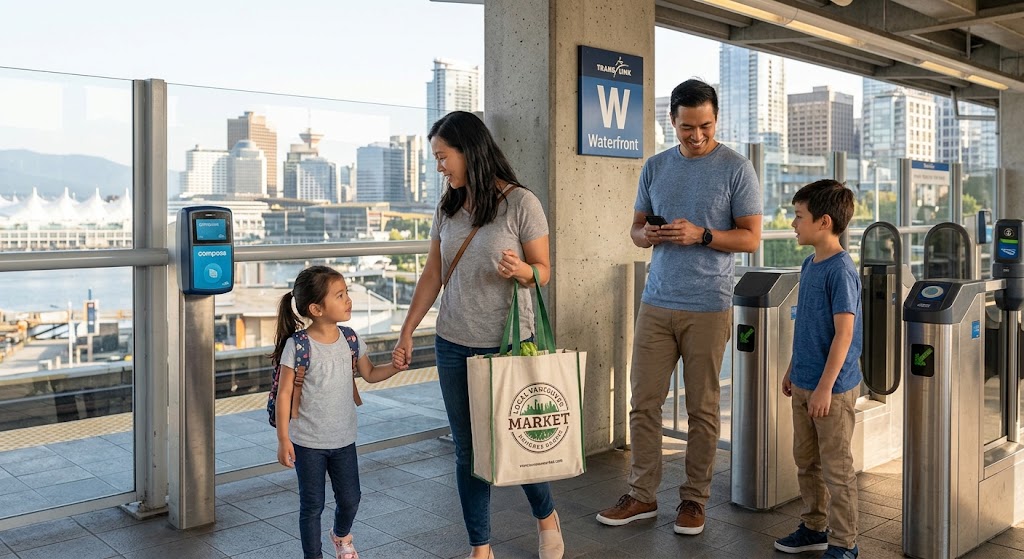
Transit is the next reliable line. TransLink raised fares by an average of 5 percent on July 1, 2026. An adult monthly pass costs $117.20 for one zone, $156.70 for two zones and $211.65 for three zones; if you pay per trip with stored value on a Compass Card, an adult fare is $2.85, $4.20 or $5.40 depending on zones. Children 12 and under ride free on bus, SkyTrain and SeaBus, which quietly removes a cost that families in many cities pay.
For groceries, phones, internet and utilities, there is no single official Vancouver monthly number, so treat the budget lines above as planning estimates rather than published facts. Statistics Canada's Survey of Household Spending is the most authoritative anchor: in 2023, B.C. households spent an average of $82,657 a year on goods and services, with shelter alone at $28,739, or 34.8 percent of the total, up 16.9 percent from 2021. In other words, more than a third of a typical B.C. household budget goes to housing before food, transport or anything else, which is exactly why the rent decision drives everything downstream.
How much income do you need to live in Vancouver?
Working backwards from the budgets above, a single person needs a take-home income of roughly $3,000 to $3,600 a month to live in Vancouver without dipping into savings, and a family of four generally needs $6,000 to $7,500 a month after tax, more if they pay unsubsidized child care. Those are living costs only; they do not include debt payments, retirement savings, or the one-time costs of arriving (first and last month's rent, a damage deposit, furniture).
It helps to see this against B.C.'s minimum wage, which rose to $18.25 an hour on June 1, 2026 (among the highest provincial rates in Canada). A single person working full time at minimum wage earns roughly $2,900 to $3,100 a month before tax, which covers a modest one-person budget in a suburb but leaves little margin in the city of Vancouver itself. For a family, two full-time incomes well above minimum wage are typically needed to live comfortably in Metro Vancouver, which is why so many newcomers arrive with a job offer or a skilled-worker profile rather than counting on minimum-wage work.
A worked example: two households, real 2026 numbers
Consider a single newcomer who takes a one-bedroom in Surrey. Using the CMHC Surrey average of $1,728, a $117.20 one-zone transit pass, about $450 in groceries, roughly $50 for a phone and $110 for internet and utilities, and $0 for MSP, the monthly total lands near $2,455 before any savings or debt. The same person choosing downtown Vancouver, where the area average is $2,198, is closer to $2,925 for an otherwise identical lifestyle, about $470 more every month purely for the postal code.
Now a family of four with two children in child care. Rent for a suitable two- or three-bedroom in a suburb realistically runs $2,800 to $3,200 (above the all-unit averages, because family-sized units cost more), groceries around $1,400, two adult transit passes at $234, phones and connectivity near $300, and child care that is either about $400 (two $10-a-Day spaces) or roughly $2,240 (two unsubsidized centre spaces). The difference between securing subsidized child care and not is nearly $1,840 a month, larger than many families' entire grocery and transit budgets combined. That is the number to plan around before you commit to Vancouver over a lower-cost region.
Vancouver versus Toronto: which is more expensive?
Cost of living in Toronto vs Vancouver is one of the most searched comparisons for newcomers deciding where to land, and the honest answer is that the two are close, with Vancouver usually edging ahead on housing. CMHC's data consistently places Metro Vancouver among the highest-rent markets in the country, and both cities sit well above the national average. The practical distinctions matter more than the headline:
Vancouver has no provincial health premium and offers the $10-a-Day child care program provincewide; Ontario's programs and health system work differently, so compare the specific costs that apply to your household, not the general which city is cheaper verdict.
Transit, groceries and phone plans are broadly comparable between the two.
Weather and lifestyle differ sharply, and that is a real budgeting factor: milder winters in Vancouver mean lower heating costs, but housing eats the savings.
If your decision is purely financial, run your own two-column budget using the rent figures for the specific neighbourhoods you would actually live in, in each city. A blanket Vancouver is more expensive is true on average but can be false for a particular suburb-versus-suburb comparison.
Common mistakes newcomers make budgeting for Vancouver
The families who struggle in their first year usually made one of the same handful of errors. In practice, here is what goes wrong:
Budgeting on the average rent. The CMHC average of $1,970 includes long-standing tenants paying below-market rent in older buildings. A new arrival signing a fresh lease should budget above the average, not at it.
Forgetting the MSP wait period. Coverage does not start the day you land. Skipping private insurance for those first weeks is a gamble that occasionally ends in a five-figure hospital bill.
Assuming $10-a-Day child care is guaranteed. It is capacity-limited, and B.C.'s Budget 2026 paused enrolment of new providers into the program during a stabilization period. Existing families keep their spots, but a newcomer cannot assume a space will be available on arrival; budget for unsubsidized care and treat a subsidized space as upside.
Ignoring the suburb option. The $400-plus monthly gap between Vancouver proper and Surrey or New Westminster is the single easiest saving available, and the transit system connects both.
Confusing settlement funds with living costs. The money you must show for an immigration application is set by a separate federal formula, not by Vancouver rents, which we explain next.
How Vancouver's cost of living affects your immigration plans
For most economic immigrants, the number that decides whether you can apply is not Vancouver's cost of living at all. Federal programs such as Express Entry require proof of settlement funds set by a fixed government formula tied to family size, and that amount is the same whether you plan to settle in Vancouver or a small prairie town. It is easy to assume an expensive city means a higher proof-of-funds requirement; it does not. We break the current thresholds and exemptions down in our guide to Express Entry proof of funds, and you should confirm the figure on the official IRCC page before you rely on it, because it is updated periodically.
Where Vancouver's cost of living genuinely shapes your immigration strategy is in the choices around it. A job offer in Metro Vancouver has to pay enough to actually live here, so wage matters as much as the offer itself. British Columbia's Provincial Nominee Program (BC PNP) is built around employers and occupations in this province, which makes it a natural route for people who specifically want to settle in the Vancouver area rather than anywhere in Canada. And the reality that a family needs two strong incomes here often steers spouses toward open work permits and pathways that let both partners work. In our work with newcomer clients, the people who settle well in Metro Vancouver are almost always the ones who lined up income and immigration status together, rather than treating the move as a cost problem to solve after landing.
If you are weighing whether to target Vancouver at all, that is worth a conversation before you build a whole application around it. Ansari Immigration is based in Vancouver, and mapping the right pathway to this specific market, Express Entry, the BC PNP, or a work-permit-first route, is exactly the kind of question we answer in a consultation. Not sure whether Vancouver is realistic for your income and profile? That is a 30-minute question, and an honest one: our licensed RCIC will tell you if a lower-cost region is the smarter target.
Book a consultation ($80, 30 min)
Frequently asked questions about cost of living in Vancouver
What is the average cost of living in Vancouver?
For 2026, a single person needs roughly $2,900 to $3,600 a month and a family of four about $6,000 to $7,500, with rent the largest share. The biggest swing is child care: a $10-a-Day space costs $200 per child, while unsubsidized centre care averages about $1,120. Housing takes more than a third of a typical B.C. household budget, so the neighbourhood you choose changes the total more than any other decision.
How much is the average rent in Vancouver?
The average rent across all purpose-built apartments in Metro Vancouver was $1,970 a month as of October 2025, according to CMHC's Rental Market Survey, with a median of $1,875. That average blends old and new buildings and long-term tenants, so a newcomer signing a fresh lease should expect to pay more. Suburbs such as Surrey ($1,728) and New Westminster ($1,794) average several hundred dollars less than downtown Vancouver ($2,198).
How much money do you need to live in Vancouver comfortably?
To live comfortably rather than just cover costs, a single person generally wants take-home pay around $3,500 to $4,500 a month, and a family of four closer to $8,000 to $9,000, once savings, some debt and unsubsidized child care are included. Those figures fall if you secure a subsidized child-care space or live in a lower-cost suburb, and rise inside the city of Vancouver. B.C.'s minimum wage of $18.25 an hour covers a lean single budget but rarely a family one.
Is Vancouver more expensive than Toronto?
They are close, and Vancouver usually edges ahead on housing, but the useful comparison is household-specific. British Columbia charges no monthly health premium and runs the $10-a-Day child care program provincewide, which can favour families here, while day-to-day costs like transit and groceries are broadly similar. Rather than trusting a blanket verdict, build a two-column budget using the rent for the exact neighbourhoods you would actually live in.
Why is the cost of living in Vancouver so high?
Housing is the reason. Statistics Canada found B.C. households spent an average of 34.8 percent of their consumption on shelter in 2023, more than a third of the budget before anything else. Strong demand, limited land and years of tight rental supply pushed Vancouver rents among the highest in Canada. The 2026 twist is that a record wave of new rental construction has lifted vacancy to a 30-plus-year high, giving renters more choice and, in newer buildings, occasional move-in incentives.
Do newcomers pay for health care in Vancouver?
There is no monthly MSP premium, since British Columbia eliminated premiums on January 1, 2020. New residents do face a wait period before provincial coverage begins, generally the remainder of the month you arrive plus two more months, and should carry private medical insurance during that gap. Once enrolled, MSP covers medically necessary doctor and hospital services, though it does not cover everything (prescription drugs and dental are separate).
Related Posts
MSP BC for Newcomers: How to Apply, the Wait Period, and What a BC Health Card Covers (2026): How provincial health coverage works in British Columbia and what the enrolment wait means for new arrivals.
Tenant Rights BC: A Complete 2026 Guide for Renters and Newcomers: Your rights on deposits, rent increases and eviction before you sign a Vancouver lease.
CRA Benefit Payment Dates 2026: GST/HST Credit, CCB, and What Newcomers Need to Know: The federal benefits that can offset your Vancouver living costs, and when they arrive.
Why work with Ansari Immigration. Three signs it is worth a professional read before you commit to Vancouver: your income depends on a job offer you have not confirmed, you are weighing the BC PNP against Express Entry, or a spouse's ability to work will decide whether the budget holds. Any one of those is exactly what Ansari Immigration untangles in a consultation. Every file is handled personally by the firm's licensed RCIC, practicing since 2019, who teaches immigration law at three colleges, with flat, transparent fees quoted upfront and no juniors or call centres. Tell us your target city and profile, and we will tell you honestly whether Vancouver is the right move.
Which city are you weighing for your move? Tell us in the comments (keep it general; for advice on your own situation, book a consultation).
Book a consultation ($80, 30 min)
This article is for general information only. It is not legal advice. Program criteria, requirements, processing times, and selection approaches can change without notice. Always confirm details on official government websites or consult a licensed Regulated Canadian Immigration Consultant (RCIC) for advice specific to your situation.