


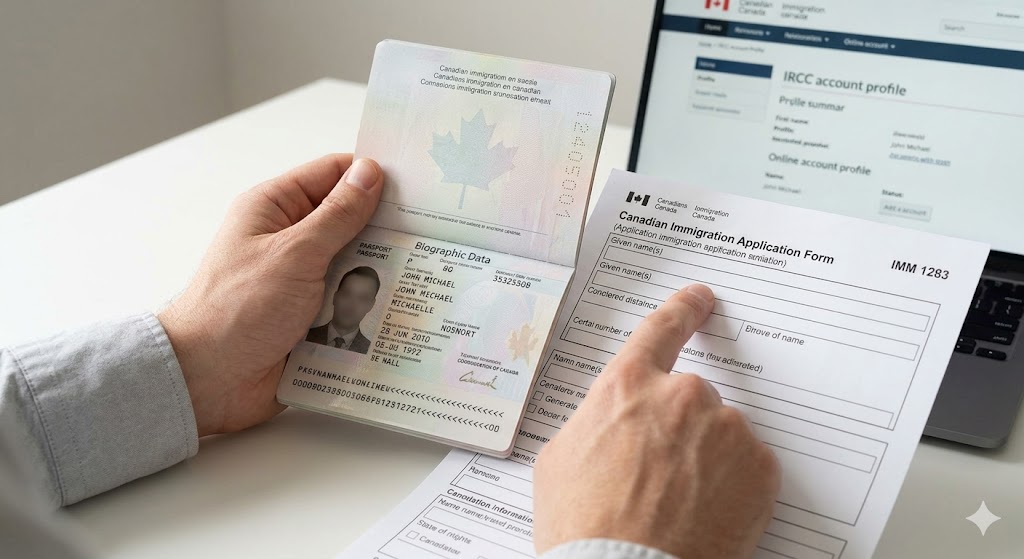
Your given name is your first name, the personal name given to you at birth, separate from your family name or surname. On Canadian immigration forms, IRCC asks for your given name exactly as it appears in your passport or travel document. Entering a nickname, preferred name, or incorrectly ordered name is one of the most common mistakes that causes applications to be returned before they are even reviewed.
What IRCC means by given name vs surname vs and legal name Canada
Three terms appear on almost every IRCC application, and each has a specific meaning:
Given name refers to your first name and any middle names. This is what goes in the "Given name(s)" field on IRCC forms and in your IRCC online account profile.
Surname means your family name or last name, exactly as it appears in your passport.
Legal name is your full name as shown on official government-issued identity documents. For IRCC purposes, your current passport is the reference document.
What to write in the given name field on IRCC forms
The rule is simple: copy your passport exactly. Every letter, space, and hyphen matters.
Family name / Surname: Enter your last name exactly as shown in your passport.
Given name(s): Enter your first name and any middle names as shown in your passport. If your passport reads "JOHN MICHAEL," your given name on the form is John Michael, not just John.
Middle name: Enter your middle name only if it appears in your passport. Do not add middle names from other documents if they are absent from your passport.
If your passport uses all capital letters for the name field (as most travel documents do), use standard capitalization on the IRCC form.
Common given name mistakes Amir sees on Canadian immigration applications
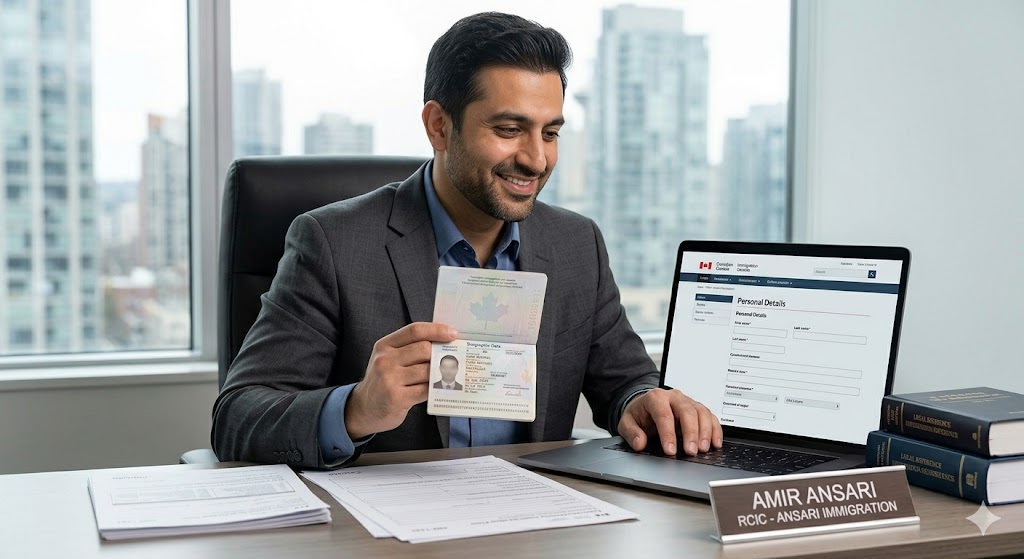
In practice, name field errors are among the most common reasons IRCC returns applications before they are assessed. Amir Ansari, RCIC (licence), sees these patterns repeatedly:
Using a preferred name or nickname instead of the passport name, for example writing "Mike" when the passport says "Mikhail"
Omitting a middle name that appears in the passport because it is never used in daily life
Name order confusion: clients from cultures where the family name comes first (South Korea, China, parts of South Asia) sometimes inadvertently swap the given name and surname fields on the IRCC form
Inconsistency across documents: using slightly different spellings on different forms, for example IMM 5709, IMM 5476, and the IRCC online profile, which can trigger identity verification requests
When teaching this concept in immigration law courses, the key distinction I emphasize is that IRCC is not asking for your preferred name or your "common" name. They want the name in your travel document. Any deviation creates a mismatch that officers are trained to flag.
What if you have only one name?
Single-name applicants present a special case. If your passport shows only one name with no split between given name and surname, enter your full name in the Surname field and leave the Given name field blank. Do not write "FNU" (First Name Unknown) on Canadian forms. That abbreviation appears in some older US immigration records but is not used by IRCC.
If you are unsure how to handle a non-standard name format on a form, consult a Regulated Canadian Immigration Consultant (RCIC) before submitting. A name error is straightforward to fix before submission and far more difficult to correct afterward.
Name fields appear on Express Entry profiles, work permit applications, family sponsorship packages, and every other IRCC form. The same passport-match rule applies to all of them.
Unsure how your name should appear on your application? Amir Ansari, RCIC can review your documents before you submit. Book a consultation at Ansari Immigration.
Frequently asked questions about given name in Canada immigration
What is the difference between given name and first name in Canada?
They are the same. "Given name" is the formal IRCC term for your first name: the personal name that distinguishes you from your family name. It may include middle names if those names appear in your passport.
Should I include my middle name in the given name field on IRCC forms?
Yes, if your middle name appears in your passport. IRCC treats all non-surname names as given names. List them in the given name field in the same order as your passport. You can also confirm your UCI number and other identifiers on file to ensure they match your current documents.
What happens if my passport spells my name differently than my birth certificate or other documents?
Use the passport spelling on all IRCC forms. If another document spells your name differently, you may need to include an explanation or supporting documentation with your application. An RCIC can advise on whether the discrepancy needs to be formally addressed before or during your application.
Can I use my married name on an IRCC application if my passport still shows my previous name?
Use the name in your current passport. If you have legally changed your name and updated your passport to reflect that change, use the new name. If your passport still shows your previous name, use that name on IRCC forms and include documentation of the name change where it is relevant to your application.
What happens if I put the wrong name on my IRCC application?
IRCC may return your application for correction, which causes delays. Errors discovered after submission can require a written request to IRCC to amend. Consistent name mismatches across multiple applications or portals can also trigger identity verification requests. If you have already submitted and noticed an error, contact IRCC as soon as possible to understand your options.
Getting the name fields right is just one part of a complete, submission-ready IRCC application. Amir Ansari, RCIC has helped hundreds of clients in Vancouver and across Canada prepare accurate, complete applications for Express Entry, work permits, family sponsorship, and more. Book a consultation today.
This article is for general information only. It is not legal advice. Program criteria, requirements, processing times, and selection approaches can change without notice. Always confirm details on official government websites or consult a licensed Regulated Canadian Immigration Consultant (RCIC) for advice specific to your situation.