


For a family file, the April 30, 2026 permanent residence fee increase can add more than one line item to
the final payment total: the principal applicant, spouse or partner, dependent children, and right of
permanent residence fee may all need to be checked before submission.
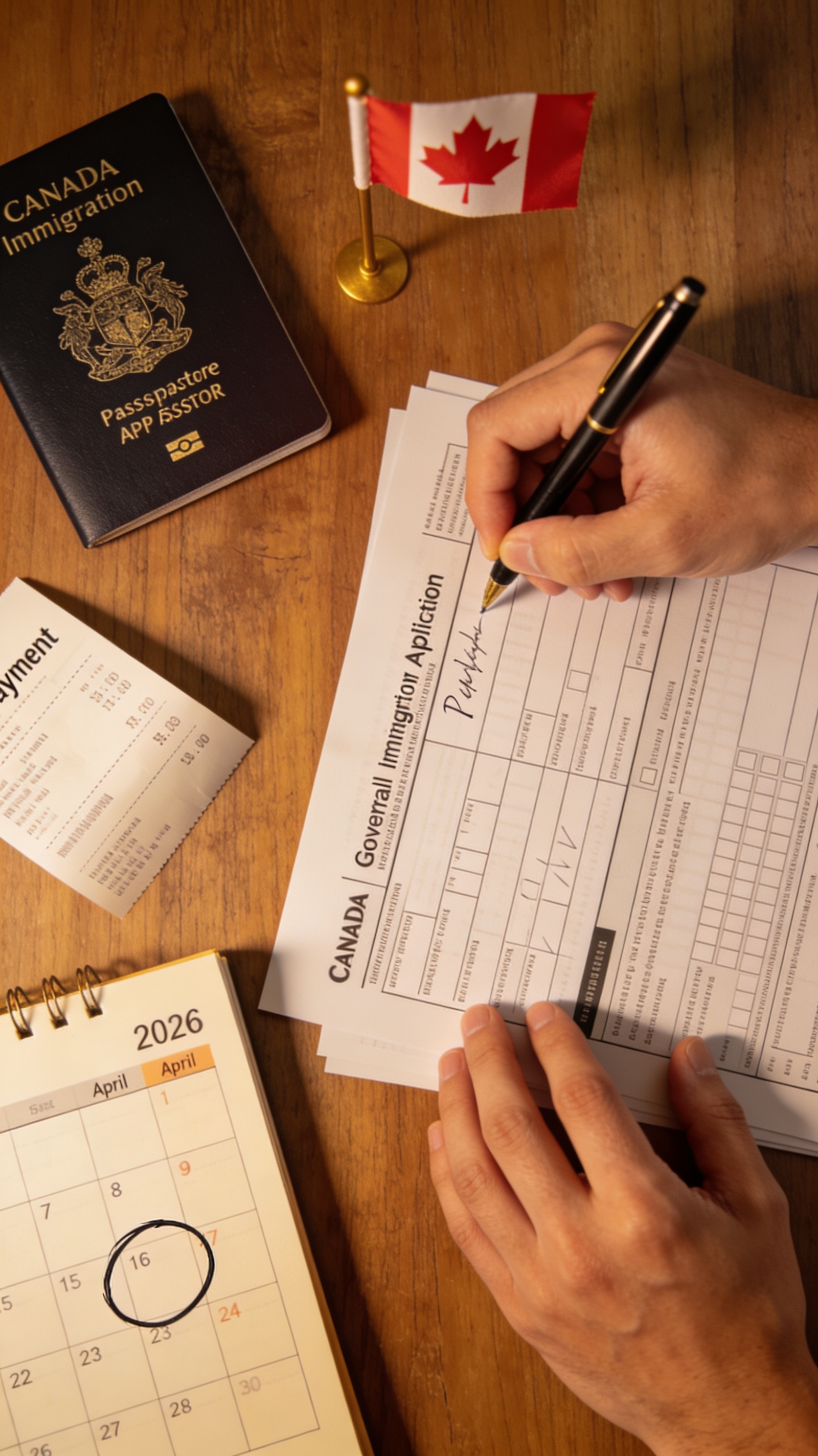
Permanent residence fees Canada 2026: IRCC has confirmed that several permanent residence fees will increase on April 30, 2026. That means today, April 28, 2026, is a good time for applicants to review their fee category, family members, payment receipts, and filing timing before the new amounts apply.
This is not a change to who qualifies for permanent residence. It is a fee update. But in real files, fee issues
can still create avoidable stress. A missing amount, stale receipt, wrong category, or rushed submission can
delay an application that was otherwise close to ready.

For applicants in Vancouver, Burnaby, Surrey, Richmond, Coquitlam, North Vancouver, West Vancouver, and nearby communities, this is especially relevant if you are preparing an Express Entry, provincial nominee, family sponsorship, protected person, humanitarian and compassionate, public policy, or permit-holder permanent residence application.
Permanent residence fees Canada 2026: what changes on April 30?
IRCC's March 27, 2026 notice says permanent residence fees will increase on April 30, 2026. The notice also says that applications received on or after April 30, 2026 will be subject to the new fees.
Here is the side-by-side fee comparison from IRCC's notice:
Fee category |
Old fee |
New fee from April 30, 2026 |
Increase |
Right of permanent residence fee |
$575 |
$600 |
$25 |
Provincial Nominee Program principal applicant |
$950 |
$990 |
$40 |
Business class principal applicant |
$1,810 |
$1,895 |
$85 |
Family class principal applicant |
$545 |
$570 |
$25 |
Protected persons principal applicant |
$635 |
$660 |
$25 |
Humanitarian and compassionate grounds or public policy measures principal applicant |
$635 |
$660 |
$25 |
Permit holders class principal applicant |
$375 |
$390 |
$15 |
IRCC says these fee adjustments are made every two years under the Immigration and Refugee Protection
Regulations to offset the cost of running the program and respond to growing demand.
The practical point is simple: if your application will be received on or after April 30, 2026, you should expect
the new fee amounts to apply.
Who should review their PR fees this week?
This update can affect many permanent residence applicants, not only one program.
You should review your fee payment if you are preparing or close to submitting:
an Express Entry permanent residence application,
a Provincial Nominee Program permanent residence application,
a spouse, partner, child, parent, grandparent, or other family sponsorship application,
a protected person permanent residence application,
a humanitarian and compassionate application,
a public policy permanent residence application, or
a permit-holder permanent residence application.
The review is even more important if your file includes a spouse, partner, dependent child, sponsor fee,
processing fee, or right of permanent residence fee. Family applications can involve multiple fee lines, and
one missed dependant can change the total.
IRCC's fee list groups permanent residence fees by program. Applicants should use the official fee list
before paying, not an old saved screenshot, old receipt, or third-party summary.

Do old payment receipts still work after April 30?
This is the question many applicants will ask.
The safest answer is that the receipt needs to match what IRCC requires when the application is received. IRCC's notice says applications received on or after April 30, 2026 are subject to the new fees. If you paid the old amount but your application is received on or after that date, you may need to pay the difference or correct the payment issue.
That is why applicants should avoid treating payment as separate from filing. A receipt sitting on your computer does not mean IRCC has received a complete application. The date that matters in the notice is the application received date.
If you already paid and have not submitted, check the official fee list again before filing. If you paid for some family members but not others, recalculate the full total. If your file changed after payment, for example because you added a spouse, partner, or child, do not assume the original receipt still covers the application.
Should you file before April 30, 2026?
Sometimes a file is genuinely ready and the timing is straightforward. In that case, it makes sense to review
the fees and submit carefully before the deadline if all requirements are already met.
A permanent residence application is not stronger because it was filed quickly. It is stronger when the
forms, dates, documents, translations, police certificates, work history, relationship evidence, travel history,
identity documents, and fee receipts are accurate and complete.
For example, saving $25 or $40 is not worth creating a bigger problem by submitting an application with
inconsistent work dates, missing proof of relationship, unclear employment letters, outdated forms, or an
incorrect dependant count. A returned or delayed application can cost far more than the fee increase.
The better approach is to ask: is the file ready today, or are we only trying to beat the fee change?
Express Entry and PNP applicants: check both timing and category
Express Entry and PNP applicants often focus on eligibility points, nomination documents, medicals, police
certificates, and work letters. Those are still the core issues. But fees matter too, especially near a deadline.
If you received an invitation to apply through Express Entry, review the total permanent residence fees
before submission. If you are applying through a provincial nominee route, confirm whether your provincial
process has separate fees in addition to the federal permanent residence fees.
This distinction matters. A provincial nomination may involve fees charged by the province, and the federal
permanent residence application has its own IRCC fee structure. Do not assume one payment covers both.
If you are still deciding whether Express Entry, a provincial nominee route, or another permanent residence
strategy is realistic, our Canada Express Entry page is a useful starting point. If you already have an
invitation or nomination and are close to filing, the fee change should be part of a final submission review.
Family sponsorship applicants: review every person in the file
Family sponsorship cases can be deceptively tricky at the fee stage because the application may include
different fee types.
A spousal sponsorship, parent and grandparent sponsorship, dependent child sponsorship, or other family class file may involve a sponsorship fee, processing fee, right of permanent residence fee, and fees for accompanying family members. Some fees apply to one person. Others depend on who is included and whether the right of permanent residence fee is being paid upfront.
IRCC's fee list should be checked against the exact family structure in the application. Do not rely on a total from another person's case, because their file may not include the same dependants or fee choices.
For local family sponsorship clients in Vancouver, Surrey, Burnaby, Richmond, and Coquitlam, this is also a good moment to review the substance of the file. The fee receipt is only one part of the application. Relationship evidence, identity documents, prior marriages, immigration history, inadmissibility issues, and sponsor eligibility all still matter.
If you are preparing a spouse or partner application, our spousal sponsorship Canada page explains the
broader service area. The fee increase should not distract from the larger goal: a clean, complete,
well-documented sponsorship package.
Protected persons, H&C applicants, public policy applicants, and permit holders
The April 30 update also matters outside the most common Express Entry and family sponsorship
categories.
IRCC lists increases for protected persons, humanitarian and compassionate grounds or public policy
measures, and permit holders. These files often involve sensitive facts, status history, family vulnerability,
risk, medical evidence, best interests of a child, establishment in Canada, or long timelines.
In these categories, the application may depend on a careful personal narrative, supporting evidence,
country conditions, medical documents, school records, employment history, community support, or legal
submissions. The fee increase should trigger a payment review alongside the evidence review.
If your status deadline is also close, get advice quickly. Fee timing is only one part of the decision. The
larger question may be whether you should file now, update evidence, restore status, extend temporary
status, or take another step before permanent residence.

A simple pre-submission fee checklist
Before you submit a permanent residence or sponsorship application near April 30, review these items:
Confirm the application category.
Use the official IRCC fee list for your exact program, not a general estimate.
Count every person correctly.
Include the principal applicant, spouse or partner, dependent children, sponsored relatives, and anyone else the fee table requires.
Check the right of permanent residence fee.
Decide whether it applies and whether it should be paid upfront or later. Paying later can sometimes add delay after approval.
Match the receipt to the application.
Make sure the receipt amount, date, and category make sense for the file you are actually submitting.
Confirm the received-date issue.
IRCC says the new fees apply to applications received on or after April 30, 2026.
Keep proof of submission.
Save the confirmation page, payment receipt, and application package records together.
Confirm quality control before submission.
Check that the forms, evidence, fee receipt, and family-member details all match before filing.
Example: how the fee deadline can affect a family file
Imagine a couple in Burnaby preparing an inland spousal sponsorship application. They paid some fees
earlier in April, but they have not submitted because they are still organizing relationship evidence and
translating a document.
On April 28, they realize the fees are increasing on April 30. They have two choices.
The risky choice is to treat the old receipt as the whole strategy and file before the evidence is ready. That
may save a small amount in fees but create a larger problem if the application is returned, delayed, or
questioned.
The better choice is to review the official fee list, confirm whether any top-up payment is needed, finish the
document package properly, and submit a complete file. If the file is ready before April 30, good. If not,
accuracy should come first.
The same logic applies to Express Entry, PNP, protected person, H&C, public policy, and permit-holder
files. The fee deadline matters, but it should be weighed with the condition of the application itself.
Frequently asked questions about the April 30, 2026 PR fee increase
Does the fee increase change permanent residence eligibility?
No. IRCC's notice is about fees. It does not change the eligibility rules for Express Entry, PNP, sponsorship, protected person, H&C, public policy, or permit-holder permanent residence categories.
What date matters for the new fees?
IRCC says applications received on or after April 30, 2026 will be subject to the new fees.
If I paid before April 30 but submit after April 30, should I check the amount again?
Yes. If the application has not been received before the effective date, review the official IRCC fee list and make sure the receipt matches the required amount.
Should I pay the right of permanent residence fee upfront?
That depends on the application type and strategy. Paying it upfront can avoid a later payment step, but you should confirm whether it applies to your category and family members.
Is it worth rushing to file before April 30?
Only if the application is truly ready. If key forms or evidence are still incomplete, the safer strategy may be to pay the correct new fee and file a stronger package.
Permanent residence fees are only one part of a successful application. The real goal is to submit the right
application, with the right evidence, at the right time, with the correct payment.
Need a final filing-readiness review? |
Reserve a consultation time and we will review your PR or sponsorship category, payment receipts, dependants, supporting documents, and timing before you submit. |
Disclaimer: This article is for general information only and is not legal advice. Immigration fees, forms,
instructions, and eligibility rules can change. Always confirm the current IRCC fee list and program
instructions before paying or submitting an application.