
Flagpoling Canada: What It Is and Is It Still Allowed in 2026?

Updated: Aug 1
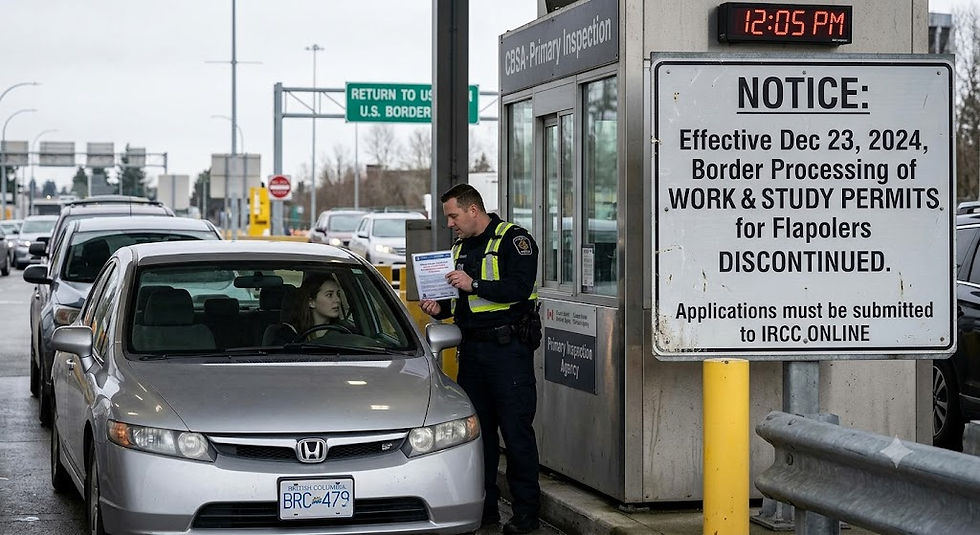
Flagpoling Canada is no longer an option for most work and study permit applicants. Flagpoling is when a temporary resident leaves Canada, makes a short visit to the United States or St. Pierre and Miquelon, then re-enters to get immigration services at a port of entry. As of December 23, 2024, the government ended flagpoling for work and study permits at the border, with only a few limited exemptions.
If your plan was to drive to the border, turn around, and walk out with a new permit the same day, that door is closed. Below is what changed, who is still exempt, and what to do instead.
What flagpoling means
Flagpoling let people who already held temporary resident status in Canada get a new or renewed permit in person at a port of entry instead of waiting for an online application to be processed. People used it to activate a work permit, study permit, or other status quickly, often the same afternoon. It was popular because it skipped the processing queue.
The Canada Border Services Agency reported processing over 69,300 flagpolers between April 1, 2023 and March 31, 2024, most of them in the Pacific, Southern Ontario, and Quebec regions. In Metro Vancouver, the Pacific Highway and Peace Arch crossings were common spots for it.
Why flagpoling Canada ended
The change was announced as part of Canada's Border Plan. The government's position is that immigration services at the border are meant for people arriving in Canada, not for people who already live here. Officials also said flagpoling tied up Canadian and American officers and added to wait times for cross-border travellers.
Effective December 23, 2024 at 11:59 pm Eastern, work and study permits are no longer issued to flagpolers at a port of entry. The Canada Border Services Agency has confirmed that anyone who tries to flagpole for a work permit or study permit will be told to submit their application to Immigration, Refugees and Citizenship Canada instead, unless they meet one of the limited exemptions.
Who is still exempt
A small number of travellers can still be processed at a port of entry even though they would otherwise meet the definition of flagpoling. According to the Canada Border Services Agency, the exemptions include:
Citizens and lawful permanent residents of the United States.
Professionals and technicians under free trade agreements with the United States and Mexico (CUSMA), Chile, Panama, Peru, Colombia, and South Korea.
Spouses or common-law partners of professionals and technicians under free trade agreements with Panama, Colombia, and South Korea.
International truck drivers who hold a work permit, where they must leave Canada for work and had maintained status from applying to renew before they left.
People who have a pre-existing appointment booked with the Canada Border Services Agency for permit processing.
If you do not fit squarely into one of these categories, you should expect to be turned away and told to apply online.
What to do instead of flagpoling
The replacement for flagpoling is simply applying through IRCC and giving yourself enough time. The key points, confirmed on IRCC's official pages:
Apply online to extend or change your work permit. The fee starts at $155, and IRCC recommends applying at least 30 days before your current permit expires.
If you apply before your permit expires, you keep maintained status, which lets you stay in Canada and keep working under the same conditions while IRCC processes your application.
To get maintained status, IRCC must receive your application before your permit expires. For online applications, that means submitting before midnight UTC on your expiry date, so do not leave it to the last hour.
Do not leave Canada expecting a quick fix at the border. A work permit is not a travel document, and leaving while your application is pending may affect your ability to re-enter and keep working. If your visitor visa has expired, you also need a new one before you can return.
Note that this is separate from another change already in effect: since June 21, 2024, you cannot apply for a post-graduation work permit at a port of entry either.
Worried your permit is going to expire before your renewal is processed? Amir Ansari, RCIC, can map out the right timing for your specific permit and status so you are not relying on a border shortcut that no longer exists. Book a consultation to get a plan in place before your expiry date.

From Amir's desk: plan early, do not gamble on the border
In practice, flagpoling is generally not an option anymore, except in those rare exempt situations. The clients who used to rely on it were treating the border as a pressure-release valve for leaving renewals too late. My advice is the opposite of a shortcut: plan your applications well in advance instead of relying on flagpoling. When you apply online 30 to 90 days before your permit expires and stay in Canada while it processes, you keep your status, keep working, and keep your options open. The people who get into trouble are the ones who let the permit lapse and then look for a same-day fix that no longer exists.
Why this matters for your immigration application
Status gaps are expensive. If your permit expires and you did not apply in time, you may lose your right to work and have to restore your status, which costs more and carries risk. Building your renewal timeline around IRCC processing, not a border run, is now the only reliable approach for most people. Knowing what happens as your work permit expires and how to extend a work permit from inside Canada is now far more important than any border shortcut. If you are managing a study-to-work transition or a work-to-permanent-residence plan, the timing of each application matters even more.

Frequently asked questions about flagpoling Canada
What is flagpoling in Canada?
Flagpoling is when a temporary resident in Canada exits to the United States or St. Pierre and Miquelon and immediately re-enters to access immigration services, such as activating a permit, at a port of entry rather than applying online.
Is flagpoling still allowed in Canada?
For work and study permits, no. Since December 23, 2024, the Canada Border Services Agency no longer issues work or study permits to flagpolers at a port of entry, except for a short list of exemptions.
Can I flagpole for a work permit in Canada?
Only if you fall within an exemption, such as being a U.S. citizen or permanent resident, or a professional or technician under a qualifying free trade agreement. Otherwise you will be told to apply to IRCC online.
Can I flagpole with a visitor visa in Canada?
The end of flagpoling targets people seeking work and study permits. If you are a visa-required traveller and leave Canada, remember that a work permit is not a travel document and an expired visitor visa must be renewed before you can return, so leaving rarely helps.
Can I still flagpole in Canada at all?
In very limited circumstances, yes, if you meet one of the listed exemptions or have a pre-existing appointment booked with the Canada Border Services Agency. For most temporary residents, the practical answer is to apply online and use maintained status instead.
Related Posts
How to Extend a Work Permit in Canada: How to renew your permit from inside Canada through IRCC, the proper alternative to flagpoling.
Work Permit Expiring in Canada: What Happens and What to Do (2026): Your options as your permit runs down, including maintained status and timing.
Restoration of Status in Canada: Processing Time and How to Apply in 2026: What to do if your status has already lapsed and you need to get back on track.
Not sure whether you qualify for an exemption or how to time your renewal? Amir Ansari, RCIC, reviews your status, your dates, and your travel plans so you apply the right way the first time. Reserve a consultation and stop relying on a border run that the rules no longer allow.
This article is for general information only. It is not legal advice. Program criteria, requirements, processing times, and selection approaches can change without notice. Always confirm details on official government websites or consult a licensed Regulated Canadian Immigration Consultant (RCIC) for advice specific to your situation.


Comments