


If you are a temporary worker in Canada, the May 4 IRCC announcement may sound like the news you
were waiting for. Up to 33,000 workers will move faster to permanent residence in 2026 and 2027. But the
most important point is also the easiest one to miss: this is not a new open TR to PR application portal.
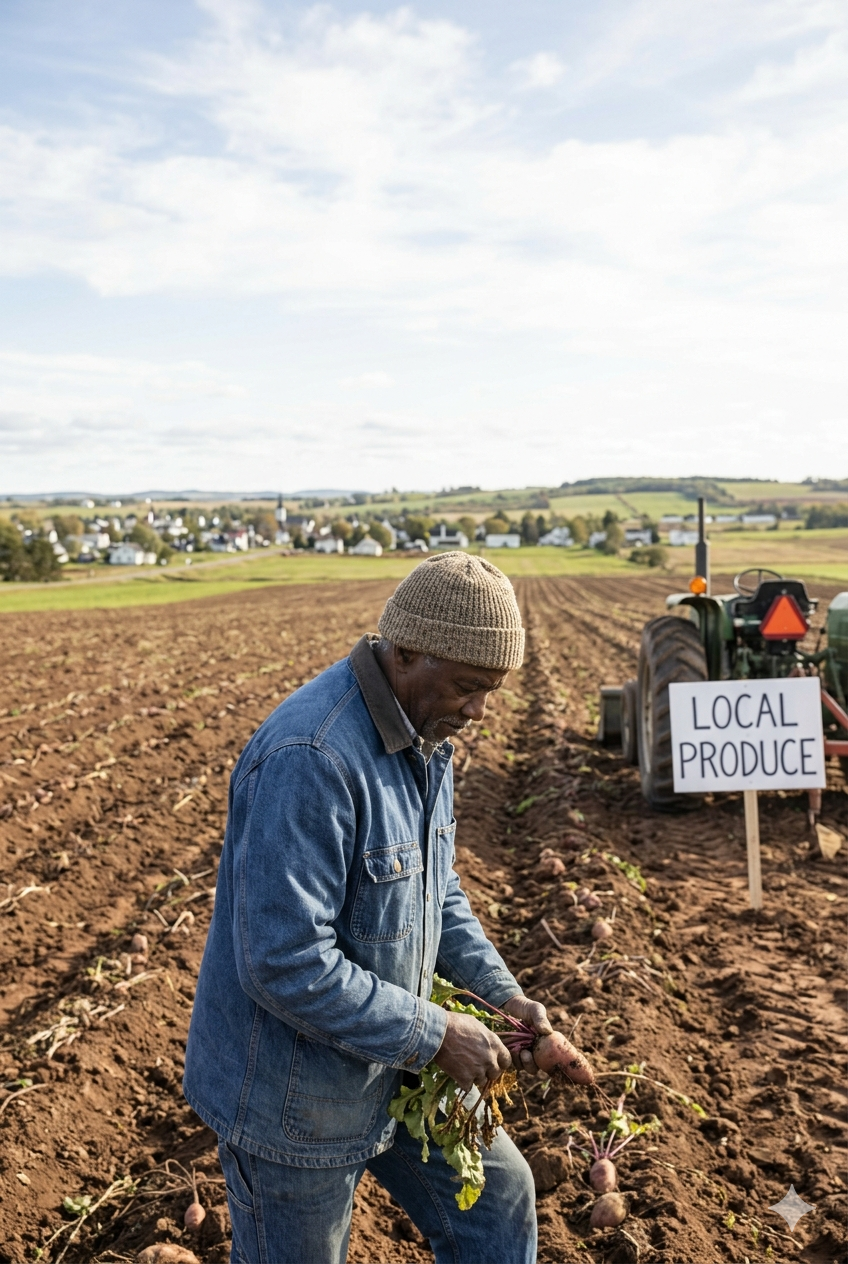
IRCC's May 4, 2026 news release says the one-time In-Canada Workers Initiative is initially accelerating eligible applications from existing inventories of work permit holders who have already applied for permanent residence. The focus is on workers who are already supporting smaller and rural communities and who applied through specific regional or occupation-driven pathways.
That distinction matters. If you already have a PR application in process through a listed program, this could affect your timeline. If you only have a work permit, a PGWP, or an Express Entry profile, the announcement does not create a new application route by itself.
In-Canada Workers Initiative: the numbers behind the announcement
IRCC says the In-Canada Workers Initiative will accelerate permanent residence for up to 33,000 workers over two years, 2026 and 2027. The department is aiming for at least 20,000 worker permanent resident admissions in 2026, with the rest in 2027.
The early progress is measurable. IRCC's tracker says 3,600 workers were granted permanent residence
under the initiative between January 1 and February 28, 2026. That is 18% of the 2026 target and about
10.9% of the two-year 33,000 total.
Measure |
Number |
What it means |
Two-year initiative target |
33,000 |
Maximum workers to transition to PR in 2026 and 2027 |
2026 target |
At least 20,000 |
IRCC's stated goal for this year |
PR admissions by Feb. 28, 2026 |
3,600 |
Early progress under the initiative |
Progress toward 2026 target |
18% |
IRCC still needs about 16,400 more admissions in 2026 to hit 20,000 |
That pace tells us two things. First, this initiative is already operating. It is not only a future promise. Second,
most of the 2026 target still has to be delivered after February, so workers with eligible in-inventory files
should watch their accounts and document requests closely over the coming months.
Not a new TR to PR Canada 2026 pathway
This is where many temporary residents may be misled by headlines. The announcement is not saying
every work permit holder in Canada can now apply for PR under a new stream.
IRCC's official backgrounder says the department is accelerating permanent residence applications already
in its inventories. It also says IRCC will continue to process applications for workers who applied for PR but
are not eligible under this initiative within existing levels space.
In plain language, there are three different groups:
Your situation |
What the announcement likely means |
You already applied for PR through a listed pathway and live in a smaller community |
You may be in the group IRCC is prioritizing for faster processing |
You applied for PR, but do not fit the smaller-community or listed-pathway focus |
Your file may still be processed, but not necessarily through this acceleration |
You only have a work permit, PGWP, or Express Entry profile |
This announcement does not create a new PR application for you |
If your work permit is expiring while your PR application is pending, do not assume acceleration will solve
the status problem in time. You may still need a bridging open work permit, an employer-supported option,
maintained-status planning, or another temporary status strategy. Our work permit page and our article on
PGWP expiry options in Canada are useful starting points if timing is becoming urgent.
Who looks closest to the 33,000 workers permanent residence target?
IRCC has not published a points grid, CRS cutoff, or public selection score for the In-Canada Workers
Initiative. Instead, it has described the types of files being accelerated.
Based on the May 4 materials, the closer-fit applicants are workers who:
have already applied for permanent residence;
are in Canada as workers;
have been living in smaller communities in Canada for at least two years;
applied through the Provincial Nominee Program, Atlantic Immigration Program, community immigration
pilots, caregiver pilots, or Agri-Food Pilot;
are contributing to in-demand sectors or local labour needs.
The smaller-community requirement is central. This is not framed as a general reward for all Canadian work
experience. It is framed as a labour retention measure for workers already rooted in communities that need
them.
For example, an Atlantic Immigration Program applicant who has worked for a designated employer in a
smaller Nova Scotia community for more than two years may be much closer to the intended group than a
PGWP holder in Vancouver who has not yet filed a PR application.
A non-Express Entry PNP nominee working in a smaller community with a submitted federal PR application
may also be closer to the target group. A worker with only an Express Entry profile, even a strong one,
should be careful. A profile in the pool is not the same as an existing PR application in IRCC's inventory.
If you are comparing regional routes, our Provincial Nominee Program page can help you understand why a
provincial nomination strategy is different from simply waiting in a federal pool.

Why IRCC is doing this now
The In-Canada Workers Initiative fits into a bigger policy shift. Canada is trying to reduce temporary resident pressure while keeping workers who are already contributing in areas with labour shortages.
IRCC's student and temporary worker tracker says new student and worker arrivals from January to
February 2026 were 72% lower than the same period in 2024. New worker arrivals alone were 71% lower.
At the same time, Canada's immigration levels materials describe a two-part strategy: lower new temporary arrivals, while creating clearer permanent residence transitions for selected people already in Canada.
That is the policy logic behind this announcement. Canada is not simply adding 33,000 new immigration spaces on top of everything else. It is using a one-time acceleration to convert selected existing workers, especially in smaller communities, into permanent residents while the broader system tightens temporary intake.
That is also why the announcement can feel both hopeful and narrow. It is good news if your facts match
the target group. It is not good advice to stop building another PR strategy if your facts do not.
What you should do if you may be covered
IRCC says eligible applicants do not need to take action to be considered under the initiative. That does not
mean you should ignore your file.
If you already applied for PR through PNP, AIP, a community pilot, a caregiver pilot, or an accepted
Agri-Food Pilot file, review the parts of your case that could slow final approval:
Is your mailing address, email, and IRCC account information current?
Have you moved from the smaller community that supported your application?
Can you document at least two years of residence in that community?
Are your work history, tax records, leases, pay stubs, and employer letters consistent?
Is your work permit still valid, or do you need a status plan?
Are police certificates, medicals, passports, family information, and civil documents ready if IRCC asks?
Did your employer, job duties, or NOC change after you filed?
This is where a file can look "eligible" in theory but still run into avoidable delay. If you want a focused
review, book a 30-minute PR inventory and status check. We can review your pathway, work permit expiry,
PR stage, smaller-community evidence, employer history, and whether you need a bridging or temporary
status strategy while the file moves.
What if you are not in the group?
If you are not already in a PR inventory, this announcement should not make you wait passively. It should
push you to ask a sharper question: what is your real pathway under the rules that exist now?
For a PGWP holder in Metro Vancouver, the strongest next step may be Express Entry, BC PNP, an
employer-supported work permit, or another provincial route. For a worker in a smaller community, the right
plan may be a regional pilot or an employer-backed PNP. For a caregiver, the relevant question may be
whether the correct caregiver pathway is still available for your facts. Our caregiver overview on Canada's
caregiver immigration pilots may help if that is your field.
The mistake is assuming "TR to PR Canada 2026" means everyone in Canada with a temporary document
now has a new route. The official materials do not say that. If you are not sure whether you qualify for
permanent residence at all, our PR eligibility overview can help you compare basic options before you
commit to one strategy.

Frequently asked questions
Q.Is the In-Canada Workers Initiative a new TR to PR pathway?
Not based on the May 4 IRCC materials. IRCC describes it as an acceleration of selected permanent residence applications already in inventory, not a new public application stream.
Q.Do I need to apply separately for the In-Canada Workers Initiative? IRCC says eligible applicants being granted PR under the initiative do not need to take action. You should still monitor your account, keep documents ready, and maintain valid temporary status while waiting.
Q. Does an Express Entry profile qualify?
An Express Entry profile alone is not a PR application. The May 4 announcement names PNP, Atlantic Immigration Program, community immigration pilots, caregiver pilots, and Agri-Food Pilot applications. If you only have a profile in the pool, this announcement does not appear to include you.
Q.Does this help workers in Vancouver, Toronto, or other large cities?
Possibly only if the person otherwise fits the official criteria, but the announcement focuses on smaller communities and workers who have lived in those communities for at least two years. Large-city workers should not assume they are covered.
Q. Does faster processing guarantee permanent residence?
No. Faster processing does not remove the need to meet program requirements, pass admissibility checks, respond to IRCC requests, and keep the file accurate.
Q. What should I do if my work permit expires soon?
Do not wait for acceleration to solve the problem. Review your PR pathway, filing stage, nomination or endorsement status, and whether you may qualify for a bridging open work permit, employer-specific work permit, maintained status, or another temporary status option.
Final thoughts
The In-Canada Workers Initiative is important because it shows where IRCC is placing priority: workers
already in Canada, already selected through certain pathways, and already rooted in smaller communities
with labour needs.
But it is not a shortcut for every temporary resident. If your facts fit, the next step is to protect the file and
your temporary status while IRCC processes it. If your facts do not fit, the next step is not to wait for
rumours. It is to build the strongest PR plan available under current rules.
Book a focused PR and work permit strategy review. We will check whether this initiative may affect your
file, whether your current PR pathway is still realistic, and what you should do if your work permit expires
before permanent residence is finalized.
Healthcare workers have targeted options: see how to immigrate to Canada as a healthcare worker.
Employers should also understand a refusal to process an LMIA.
Disclaimer: This article is for general information only and is not legal advice. IRCC priorities, processing
practices, program criteria, and temporary status options can change. Get advice on your own facts before
relying on a filing strategy.