


A working holiday visa Canada applicant gets an open work permit through International Experience Canada, usually valid up to 12 or 24 months depending on the country agreement. Three things decide the actual length: your passport expiry, your health insurance coverage, and your age on the day you are invited.
Ansari Immigration, a Vancouver RCIC practice, treats the health insurance purchase as a permit-length decision rather than a box to tick, because the officer instructions tie the two together directly.
Why the length matters more than the approval
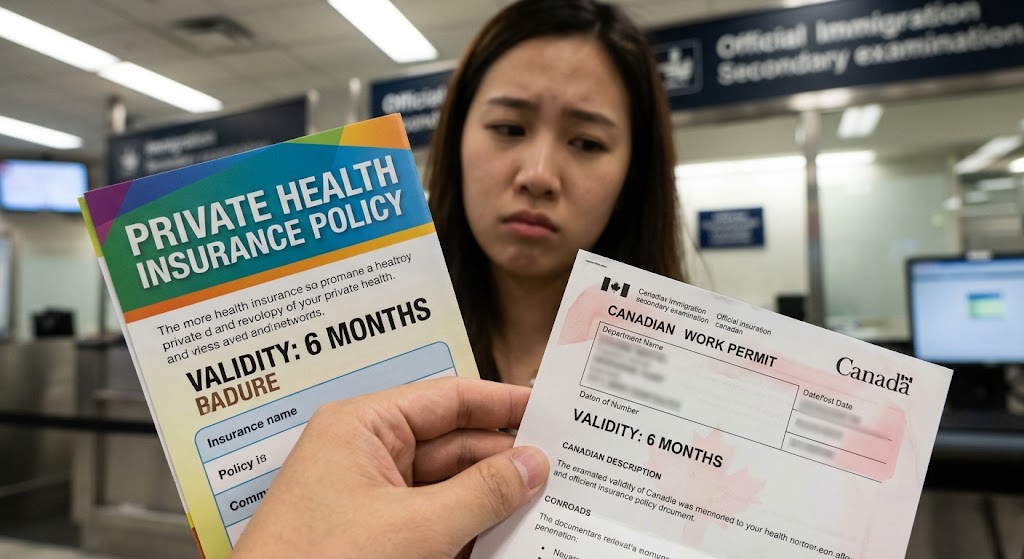
The expensive mistake in this program happens after approval, not during it. IRCC's processing instruction for IEC tells officers that if your health insurance runs shorter than the permit you asked for, "the duration of the work permit must be shortened to match the validity of the health insurance," and that applicants whose permits were shortened for that reason "are not eligible to apply for an extension at a later date." Buy six months of cover against a two-year entitlement and you have spent your one participation on a six-month permit you cannot extend. Everything below is built around the rules that produce that outcome, all of them from the instructions officers actually apply.
Unsure whether any of this applies to your file? A 30-minute Ansari Immigration consultation settles it.
What the working holiday visa canada actually is
There is no document called a working holiday visa. What you receive is a work permit issued under International Experience Canada, Canada's youth mobility program. IRCC's program delivery instruction states the purpose plainly: "International Experience Canada (IEC) allows youth to take up employment in Canada when Canadians have similar reciprocal opportunities abroad."
The legal machinery matters because it explains the rules you will run into:
The permit is exempt from a Labour Market Impact Assessment. You do not need an employer to prove anything to Employment and Social Development Canada.
The exemption code officers enter is C21.
The authority is paragraph 204(d) of the Immigration and Refugee Protection Regulations.
That last point is where a lot of published material is out of date. IEC used to sit under paragraph 205(b). IRCC moved it to 204(d) effective December 18, 2024, and the new provision speaks of "a youth mobility agreement or arrangement between Canada and the government of a foreign state." Pages and posts still citing R205(b) for IEC were correct two years ago and are wrong now. If you are reading something that cites R205(b), assume it has not been reviewed since 2024 and check the rest of it too.
The three IEC categories and which one you can actually use
Your country agreement decides which categories are open to you, not your preference.
Category |
Permit type |
Job offer needed first |
Can you change employers |
Who it is built for |
Working Holiday |
Open work permit |
No |
Yes, whenever you want or need to |
Travel and fund yourself, any employer, any province |
Young Professionals |
Employer-specific |
Yes, and it must count toward your professional development |
Only with a valid reason |
Career development in your field |
International Co-op (Internship) |
Employer-specific |
Yes, a placement tied to your studies |
Only with a valid reason |
Students registered at a post-secondary institution outside Canada completing a required placement |
Source: International Experience Canada: About the program and the IRCC Help Centre. Verified September 2026.
The Young Professionals job classification rule catches people out. IRCC's eligibility page states the job "must be classified under Training, Education, Experience and Responsibilities (TEER) category 0, 1, 2 or 3 of the NOC," and that a TEER 4 job may qualify if it is in your field of study. The December 24, 2025 program delivery update added one country-specific easement to that: Dutch students may now submit an official letter confirming that TEER 4 employment relates to their field of study. The default, though, is that a TEER 4 job does not support a Young Professionals permit on its own. If the job you were offered is hospitality or retail, Working Holiday is almost certainly your category.
Which countries are in the 2026 pools, and the two that left
Thirty-six countries and territories had a youth mobility agreement with Canada when this was checked in September 2026 (the page lists them in a selector rather than printing a total). Two names that appear in older articles are no longer on the list: Ukraine and Mexico were removed from the eligible countries in the December 24, 2025 revision of the IEC instructions.
Two more country-level quirks are worth knowing before you plan around a category:
Switzerland has Young Professionals and International Co-op, but no Working Holiday.
The Netherlands has Working Holiday and Young Professionals, but no International Co-op.
Several countries, including Belgium, Denmark, Hong Kong, Iceland, Japan, New Zealand, Andorra and San Marino, offer Working Holiday only.
The length of a Working Holiday permit is also set by your agreement, not by the program, and this is where "up to 2 years" misleads people. Most agreements are 12 months. A handful are longer:
Working Holiday maximum |
Countries |
Age range |
Up to 24 months |
Australia, France, Ireland, Portugal |
18 to 35 |
Up to 23 months |
New Zealand |
18 to 35 |
Up to 12 months |
Andorra, Austria, Belgium, Iceland, Netherlands, Sweden |
18 to 30 |
Up to 12 months |
Chile, Costa Rica, Croatia, Denmark, Estonia, Finland, Germany, Greece, Latvia, Lithuania, Luxembourg, Norway, Poland, San Marino, Slovakia, Slovenia, Spain, Taiwan |
18 to 35 |
Source: International Experience Canada: eligibility by country and category, page last modified August 7, 2026. Read from the live country selector and verified September 2026. Countries not listed above, including the United Kingdom, Hong Kong, Japan, Italy, the Czech Republic and the Republic of Korea, have their own terms that did not render in full when this was checked, so read your own row rather than assuming.
Check that row before you build a plan around a category or a two-year stay, and note that some agreements also require you to be resident in that country when you apply, not merely a citizen of it. Italian citizens, for instance, must provide a certified English or French translation of their residence certificate, the certificato di residenza.
The age rule is measured on a date you do not control
This is the single most misread rule in the program. The age range comes from your own country's row on the eligibility-by-country page, 18 to 35 in most agreements and 18 to 30 in several, but the date the age is measured on is not the date you create your profile and not the date you apply. IRCC's participation eligibility instruction is explicit: "Applicants must meet the age requirement applicable to them as defined in the bilateral agreement or arrangement between Canada and their country or territory of citizenship on the date they receive an invitation to apply (ITA)."
You can sit in a pool while eligible and age out before an invitation reaches you. Rounds of invitations run on IRCC's schedule, not yours, and the number invited per round varies. If you are in the last year of your range, the practical consequence is that a season you enter late is a season you may not survive, and nothing about being in the pool preserves your eligibility.
The insurance mistake that shortens your permit permanently
Health insurance is the most consequential thing in this program that nobody treats as consequential, and the reason is a gap in the process. IRCC's participation eligibility instruction states that "at the time of application, IEC applicants do not have to provide proof of health care insurance." You only declare that you will buy it. Nothing in the assessment of your application checks the policy, so nothing catches a short one.
The check happens at the border instead. Officers "must verify that health care insurance has been obtained before issuing the work permit," and "insurance must be valid for the entire period for which the work permit is sought." Two consecutive policies are acceptable if a single one covering the whole period was not available. If you have no insurance at all, the instruction is stark: participants "will not be eligible to receive the work permit and may be inadmissible to Canada."
If the policy is merely short, the officer does not turn you away. The officer issues a shorter permit. The processing instruction directs that "the duration of the work permit must be shortened to match the validity of the health insurance," and then closes the door: "If the client receives a shorter work permit due to the length of their insurance policy, they are not eligible to apply for an extension at a later date."
Here is how that plays out. This is an illustrative scenario built from the verified rules above, not a client file:
A 27-year-old Irish citizen is eligible for up to 24 months, which is what the Ireland Working Holiday agreement allows. Flights are booked, and travel insurance is bought as a 12-month policy because a year felt like the sensible length for a first stint. At Toronto Pearson the officer checks the policy, sees 12 months, and issues a 12-month work permit. Fourteen months later, having found work worth staying for, the applicant looks at extending that permit. No extension of it is available: it was shortened because of the insurance, and the instruction removes the extension option in exactly that case. The other 12 months cannot be recovered by extending, and any route to staying now means qualifying for something else from scratch.
IRCC's own instruction contains the fix, and it is one line that almost no article repeats: "Applicants should be advised that they should purchase their health care insurance only after they have received their port of entry letter of introduction." Buy the policy after approval, size it to the full period your agreement allows, and the trap never opens.
The same logic applies to your passport. Officers "cannot issue a work permit or grant status as a temporary worker beyond the validity of the passport." A passport with 14 months left produces a 14-month permit, however long your agreement allows. Renew the passport before you travel, not after.
If the length of your entitlement matters to your plans, that is worth an eligibility check with Ansari Immigration before you buy the policy.
Book an eligibility check, $80 for 30 minutes
The documents that hold applications up
Two document requirements cause most of the delay in IEC files, and both have timing rules that are easy to miss.
Police certificates. You need one for your country of current residence, and IRCC's eligibility instruction requires that it "cannot be older than 6 months" measured from the day your application is received. You also need one from every additional country or territory where you lived "for 6 months or more since age 18," and each of those "must have been issued after the last time they lived there." If a certificate genuinely cannot be obtained in time, the instruction allows you to submit proof that you requested it, with an explanation of the delay, or official documentation showing conditions in that country prevent issuance. Our guide to getting a police clearance certificate covers the mechanics.
Medical exams. Most IEC applicants do not need one. You do if you lived or travelled in a designated country for six months within the past year and plan to stay in Canada more than six months, or if you intend to work in health care, primary or secondary education, child care or elderly care. It has to be done by an IRCC-approved panel physician, not your own doctor. If you will be working in one of those occupations, book the exam before you are invited rather than inside the 20-day submission window.
You also cannot include dependants on an IEC application. The instruction is that applicants "may not include any dependants (that is, spouses, common-law partners or children) on their application to participate in the IEC Program," so no one gets a spousal open work permit simply because you were accepted. Read the next sentence of that instruction before you conclude your partner is stuck, though: this "does not prevent family members from submitting their own individual request to come to Canada (for example, a spouse may submit their own application to participate in the IEC Program)." Two eligible partners can each hold their own IEC permit. They just cannot ride on one application.
When your one participation is actually used up
Countries cap how many times you can participate, and most Working Holiday agreements listed in September 2026 allow one. The question that decides whether you have spent it is a specific one, and the answer is not intuitive.
Since January 9, 2023, IRCC's instruction is that "IEC counts participations when foreign nationals have their work permit issued at the port of entry." Not when you are invited. Not when you are approved. Not when you receive the port of entry letter of introduction. The count happens at the border, when the permit is printed.
That gives you a genuine off-ramp. Your letter of introduction is valid for one year, it does not guarantee entry or a work permit, and if it expires before you travel, IRCC states it "doesn't count as a participation." An applicant who is approved and then cannot travel has not burned their shot. An applicant who lands, takes the permit, and flies home three weeks later has.
Applicants going through a recognised organisation are on different terms, and better ones than most people realise. The instruction allows them to apply through a recognised organisation "twice in their lifetime over and above the participations that the youth mobility arrangement allows," with repeat category participations permitted, and the two are counted cumulatively across every recognised organisation, past or future.
The deadline chain after your invitation
Every one of these is a hard clock, and missing the first two puts you back in the pool.
10 calendar days to accept or decline the invitation to apply.
20 calendar days after accepting to complete and submit the work permit application.
30 days to give biometrics at a visa application centre once you get the instruction letter.
56 days is the IEC service standard for assessing "applications with complete information and all required supporting documents." IRCC's processing instruction phrases the same standard as "eight weeks." An incomplete application is not on that clock at all.
1 year of validity on the port of entry letter of introduction once approved.
Everything except the United States route runs through your IRCC secure account. The instruction is blunt about it: "The only method for IEC applicants to submit a work permit is through their IRCC Personal Account (American citizens and U.S. permanent residents excepted)." US citizens and US permanent residents apply through a recognised organisation and may request the permit at a port of entry.
What a working holiday visa Canada application costs
Item |
Amount (CAD) |
Who pays |
Applies to |
IEC participation fee |
184.75 |
Applicant |
All three categories |
Open work permit holder fee |
100.00 |
Applicant |
Working Holiday only |
Biometrics, per person |
85.00 |
Applicant |
If required for your citizenship |
Employer compliance fee |
230.00 |
Employer |
Young Professionals and International Co-op |
Work permit processing fee |
0.00 |
Not charged |
IEC applicants are exempt |
Funds you must show on arrival |
2,500.00 minimum |
Applicant |
All three categories |
Source: IRCC fee list, last updated September 21, 2026, and the IEC participation eligibility instruction. Verified September 2026. Fees change without notice, so confirm on the official fee list before paying.
Two notes on that table. The $155 work permit processing fee that every other work permit applicant pays does not apply here: the instruction confirms IEC applicants "pay an IEC fee and are exempt from paying the work permit processing fee," under cost recovery exemption code E05. And the $2,500 is not a fee, it is the minimum IRCC requires you to have for your first expenses, on top of money for a return flight. One group should budget above it: the instruction says applicants "who intend to take an unpaid work placement in Canada under the International Co-op (Internship) category may be asked by a border services officer to prove that they have additional financial resources to cover their expenses for their entire stay."
Have you done an IEC season already? The funds figure and what officers actually asked to see are the two things future applicants most want to hear about. Add it in the comments, keeping it general.

What your IEC time is worth afterwards, and what it is not
The honest answer to "how to stay in Canada after IEC" is that the permit itself gives you nothing automatic. What it gives you is Canadian work experience, and Canadian work experience is the entry ticket to the Canadian Experience Class stream of Express Entry. A Working Holiday open work permit counts the same as any other authorised work for that purpose, provided the work itself qualifies.
Studying during your IEC year is where a specific misunderstanding lives, and there is a documented IRCC answer to it. In March 2025 a Case Processing Centre officer escalated a question to IRCC's Immigration Program Guidance unit. An applicant was claiming Canadian education points, the school was a designated learning institution that is not eligible for a post-graduation work permit, and the applicant held a C21 work permit, which is the IEC code. Could the points be awarded? The answer, tracking number IM-2025-0051, dated March 19, 2025, was that the permit is beside the point: "The possession of a specific type of work permit is not relevant to the decision to award points." That document is internal functional guidance released under the Access to Information Act and held on file here. It is not published on canada.ca, so you cannot look it up, and it is guidance rather than law.
What the published rule says is that the institution decides it. Section 30(4) of the Ministerial Instructions respecting the Express Entry system defines an eligible credential as one from a Canadian public post-secondary institution, or from a Canadian private institution operating under the same rules and regulations as a public one, or, for a Bachelor's, Master's or doctoral degree only, from a private institution that a provincial statute authorises to confer that credential.
Two further points come from that same internal answer rather than from any public page, and are worth knowing for what they tell you about how the assessment is supposed to run: the guidance warns officers that stating an institution is not PGWP eligible "is not a valid legal reason to remove CRS points," and that an officer removing them should verify the institution's legal status with the province and cite section 30(4) itself; and it notes that a credential from a designated learning institution that is not public or authorised can still score under core human capital and skill transferability, even where the additional-factor points are unavailable.
For anyone planning a course alongside a working holiday in Metro Vancouver, that distinction is worth checking before enrolling, because the private-college market here contains plenty of designated institutions that are registered rather than authorised.
Where the official sources go quiet
Three things are worth naming, because no amount of reading the program pages will settle them for you:
Live quota and spots-remaining numbers are not on a fixed page. IRCC's rounds of invitations page puts them behind a country and category selector and states the numbers "are normally updated on Fridays." Any article that prints a quota figure is quoting a snapshot from the day it was written. Pull your own country's number from the selector.
IRCC does publish your odds, and most articles miss it. A separate page rates your chances of getting an invitation with published bands: Excellent is an 80 to 99 percent chance, Very good 60 to 79, Fair 40 to 59, Low 20 to 39, Very low 1 to 19. The ratings are given per country and per category and updated weekly once the season opens. What they are not is a season-level forecast: the rating estimates the next round, not your year.
"A valid reason" for changing employers on a Young Professionals or Co-op permit is not defined on the public pages. IRCC states the restriction without publishing the test. If you are in that position, treat the change as something to plan rather than assume.
Frequently asked questions about the working holiday visa canada
What is International Experience Canada?
International Experience Canada is Canada's youth mobility program, which lets citizens of 36 partner countries and territories aged roughly 18 to 35 work in Canada for up to two years on a work permit that is exempt from a Labour Market Impact Assessment.
It runs in three categories: Working Holiday, Young Professionals and International Co-op (Internship). Which of the three you can use is set by your own country's bilateral agreement with Canada, not by preference.
How do you get a working holiday visa for Canada?
You create a free IEC profile in your IRCC secure account, choose the pools your country agreement allows, and wait for an invitation to apply, after which you have 10 days to accept and 20 days to submit the work permit application.
IRCC's Help Centre confirms there are no fees to submit a profile to an IEC pool, and rounds of invitations run until the spots for your country are gone or the season closes.
Who is eligible for a working holiday visa in Canada?
You are eligible if you are a citizen of one of the 36 countries or territories with a youth mobility agreement with Canada, you meet the age range in that agreement on the date you are invited, you hold a passport valid for your whole stay, you have at least CAD $2,500 for initial expenses, and you can buy health insurance covering your entire period in Canada.
Some agreements add a residency condition, meaning you must be living in that country when you apply rather than only holding its citizenship.
What is the age limit for a working holiday visa in Canada?
The age limit is 18 to 35 under most country agreements and 18 to 30 under some, and it is assessed on the date you receive your invitation to apply rather than the date you enter the pool or submit the application.
Sitting in the pool does not preserve eligibility, so applicants in their final eligible year should enter as early in the season as they can.
Can I extend my working holiday visa in Canada?
Extension depends on your country agreement and on why your permit was issued for the length it was, and there is one situation where extension is ruled out entirely: IRCC's processing instruction states that applicants whose permits were shortened to match a shorter health insurance policy are not eligible to apply for an extension later.
Most participants who want to stay longer move to a different permit stream rather than extending the IEC permit itself.
Can I get a second working holiday visa for Canada?
Most Working Holiday agreements allow one participation per person, so a second one is usually not available in the same category with the same country, though your agreement may allow a different category such as Young Professionals or International Co-op.
Participation is only counted once your work permit is actually issued at the port of entry, so an approval you never used does not spend your turn. Applicants going through a recognised organisation get two lifetime participations on top of what their agreement allows.
Can I apply for a working holiday visa while in Canada?
You can create an IEC profile and submit a work permit application from inside Canada, but the ordinary IEC route has the permit issued at a port of entry, and IRCC counts your participation at the moment it is issued there.
If you are already in Canada on another status, confirm with IRCC how your permit would be issued before you assume anything, because a plan that depends on leaving and re-entering also depends on being admitted again, which is never guaranteed.
How do you stay in Canada after IEC?
Staying after IEC means qualifying for something else, most commonly the Canadian Experience Class through Express Entry using the Canadian work experience your IEC permit let you build, a provincial nomination, or an employer-supported work permit.
Start that assessment around the middle of your permit rather than in its final weeks, because most routes need reference letters, language results and police certificates that take months to assemble.
Doing this alone, or with Ansari Immigration
Doing it alone: for a straightforward Working Holiday application with one citizenship, a clean history and a two-year passport, this is a form-filling exercise and most people should just do it themselves. Ansari Immigration will say so.
With Ansari Immigration (flat $750 for an open work permit, quoted upfront, additional family members quoted separately): the cases worth paying for are the ones with a wrinkle, such as a prior refusal anywhere, a criminal record question, a police certificate you cannot obtain, a Young Professionals job offer whose TEER classification is arguable, or a plan to convert IEC time into permanent residence. Every Ansari Immigration file is handled personally by the firm's licensed RCIC, regulated by CICC, practising since 2019.
Book a consultation, $80 for 30 minutes
Which country's pool are you in this season, and how many rounds have you waited through? Tell us below, keeping it general, and for advice on your own file use a consultation.
You may also want the wider picture on work permits in Canada, or on Express Entry if permanent residence is where this is heading.
Related Posts
Open Work Permit in Canada: Who Qualifies, How to Apply, and Processing Times (2026): what an open work permit lets you do and who else can get one, which is the permit type a Working Holiday participant receives.
Canadian Experience Class: Full 2026 Eligibility Guide to the 1,560-Hour Rule and Which Work Counts: how the Canadian work experience you build on an IEC permit converts into an Express Entry claim.
Work Permit Expiring in Canada: What Happens and What to Do (2026): your options as an IEC permit runs down, including what happens if you let the date pass.
This article is for general information only. It is not legal advice. Program criteria, requirements, processing times, and selection approaches can change without notice. Always confirm details on official government websites or consult a licensed Regulated Canadian Immigration Consultant (RCIC) for advice specific to your situation.